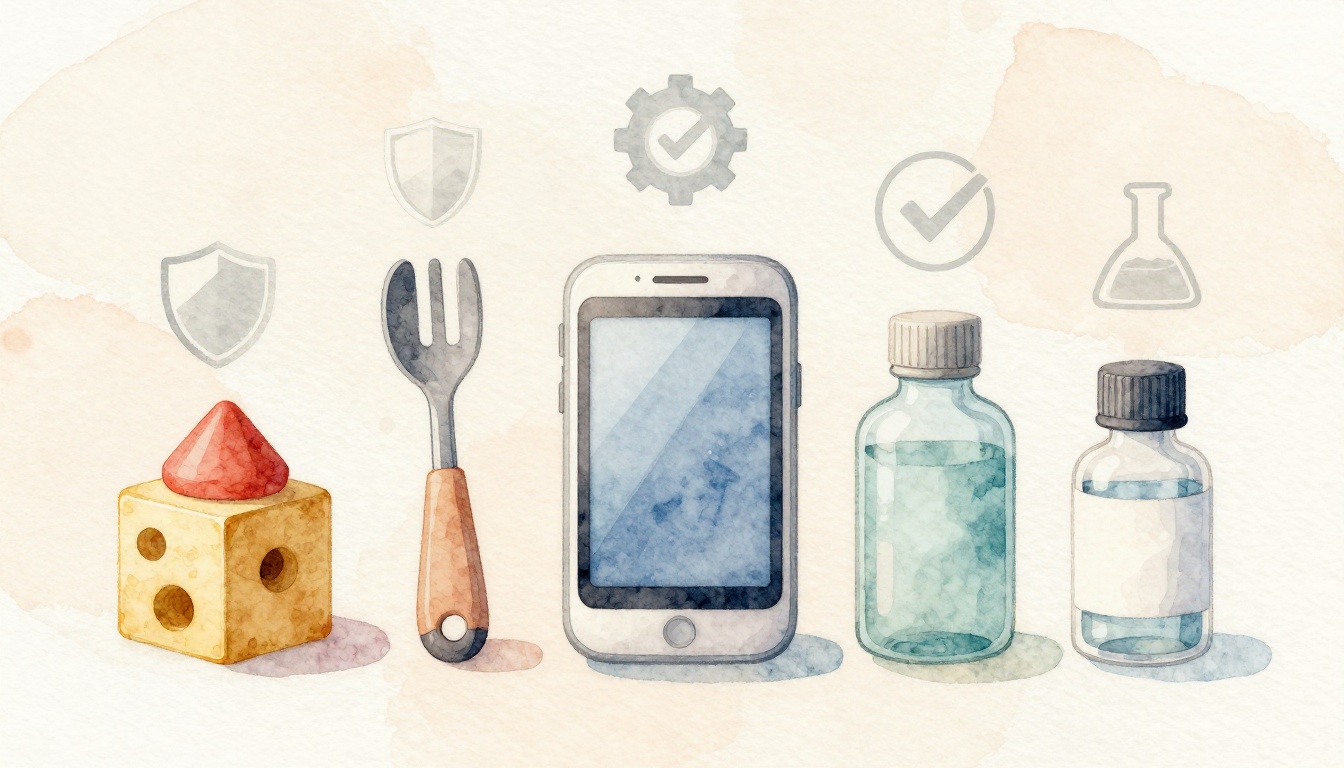
Last week, a nephew reached for a “just like the picture” toy, and a small part popped loose. It was only a close call, but it still made one thing clear: safety standards in everyday products aren’t paperwork nobody reads. They’re rules and tests that check whether items like toys, electronics, furniture, and kitchen tools can harm people.
These standards focus on real risks, like choking hazards for kids, fires or burn injuries from appliances, chemical exposure from bad packaging, and tip-overs that can trap or injure. In the U.S., key players include the CPSC (recalls and safety rules), UL (safety testing), ASTM (voluntary standards and testing methods), and FDA (mainly for food and medical items). Around the world, ISO helps set widely used safety and quality expectations.
Next, you’ll see how to use these standards to choose safer products and catch recall warnings before they reach your home.
How Safety Standards Stop Common Household Dangers
Safety standards act like a home’s “hidden brake system.” They don’t just sound good on paper. They run through tests that try to break products in realistic ways, so you do not have to play detective when something goes wrong.
In the U.S., the big goal is simple: prevent injuries that happen in everyday moments. Kids reach, mouths explore, cords dangle, and dressers get bumped. After all, most household danger starts with something ordinary, like a toy part that comes loose or a battery that ends up where it shouldn’t.
CPSC data already shows how serious this can be. For example, CPSC reports that clothing storage units tipped over and killed 199 children from 2000 through April 2022. It also notes 84,100 dresser tip-over injuries treated in ERs from 2006 through 2021, with 72% involving children. That pattern is exactly why standards focus on the failure points that happen most often.
Next, let’s look at two common danger areas, toys and household electronics, and how standards guide safer design choices.
Choking and Sharp Edge Hazards in Toys
Toy safety standards focus on what kids do first, grab, mouth, chew, and tap. ASTM F963-23 is a key standard for toys meant for children under 14. It targets hazards that show up when a toy breaks apart or when edges and surfaces cause injury.
A few of the tests matter most for real life:
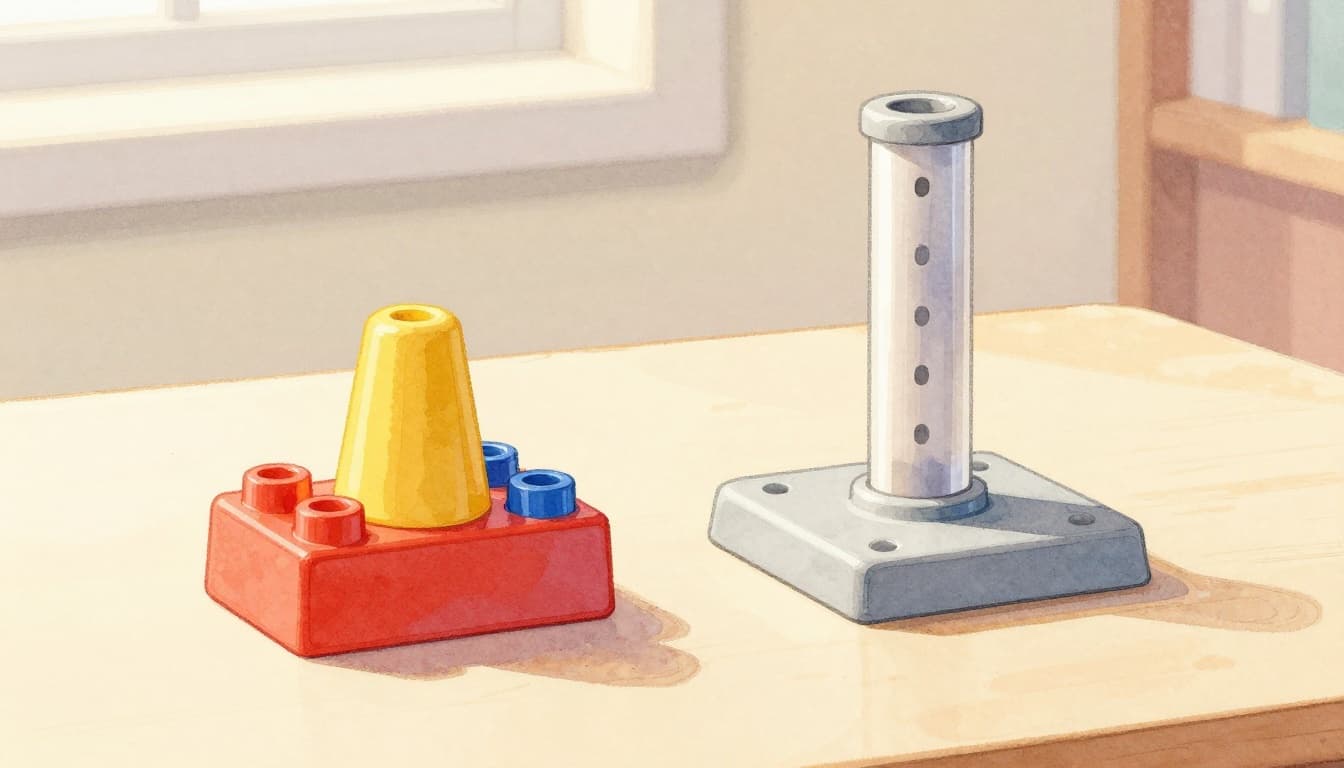
- Small parts risk: If a toy or component can detach into a piece small enough to fit a child’s airway, that’s a red flag. ASTM F963 includes small parts testing methods designed to reduce choking odds.
- Sharp edges and points: Even if a toy stays intact, rough or pointy features can cut skin. ASTM F963 uses performance requirements to limit dangerous edge geometry.
- Projectile hazards: Toys with moving pieces, spring action, or impact features must meet requirements meant to prevent unsafe ejections.
Standards also cover chemical exposure limits. For example, ASTM F963-23 includes lead limits under 100 ppm and places restrictions on certain phthalates. Those limits help reduce the chance that small children ingest harmful substances from materials.
Most importantly, reputable manufacturers back up compliance with third-party testing and provide documentation like a Child Product Certificate. That certificate signals the product met required test methods, not just a claim on a box.
If you want the core text behind the approach, ASTM’s F963-23 is summarized in the official document: ASTM F963-23 toy safety specification. You’ll also see policy updates tied to this standard in the Federal Register on mandating ASTM F963.
Fire and Shock Risks in Electronics
Electronics standards focus on a different fear: power failures that lead to burns, shocks, or fire. UL safety requirements help manufacturers prove that a product handles electricity safely under normal and stress conditions.
For toys and appliances that include powered parts, UL requirements often cover topics like:
- insulation and grounding
- overheating protection
- safe battery handling and compartment design
- strain relief for cords and connections
On the radio side, FCC rules address interference. That matters because noisy signals can push devices to behave oddly, and in some cases, poor design can lead to unsafe operation. FCC compliance helps keep devices within defined limits for how they transmit.
Then there’s the everyday cord problem. CPSC rules focus on preventing strangulation and entanglement hazards from cords. That’s why many products use durable cord designs, safe lengths, and secure routing.
A real example is UL 696, which covers safety for electric toys. It helps test things like power control, temperature limits, and whether the toy’s electrical parts stay safe in use.
So when you see safety marks or certificates, think of them as proof that someone tried to make the product fail in a controlled way. That’s also why it’s worth pairing “standard compliance” with quick habits, like checking cords for damage and keeping battery compartments closed.
For a plain-English look at how these standards fit together for electric toys, see: electric toy standards explained.
Key US Safety Rules for Toys, Furniture, and Appliances
Standards matter because kids and adults interact with products in messy, real-world ways. When you buy a toy, open a drawer, or plug in an appliance, you’re betting that the product will fail safely, not dangerously. In the U.S., the CPSC sets rules and runs enforcement, ASTM and UL shape test methods, and ISO often mirrors the “how” for global consistency.
This section focuses on the rules that most often show up in everyday homes. You’ll see what to look for and which hazards get tested first.
What ASTM F963 Means for Your Child’s Toys
ASTM F963 is one of the most important toy safety standards in the U.S. It covers toys for children under 14, and the latest update became mandatory on April 20, 2024. Since the CPSC ties this standard to federal toy safety requirements, your safest bet is to choose products that meet the updated test expectations, not just the marketing claims.
Here’s what ASTM F963 checks, in plain terms. These are the failure points that cause the most harm when toys break, overheat, or expose children to harmful substances.
Flammability rules (fire does not forgive)
Toy fires often start with fabric, foam, or outer coverings. ASTM F963 sets limits aimed at slower burning and discourages highly flammable materials. For example, plush and fabric toys must meet burn-rate limits to reduce flame spread. That matters during the moments when a child’s toy ends up too close to heat sources, like candles, heaters, or cooking areas.
Even if a toy looks harmless, the standard treats flammability as a “small risk with big consequences” issue.
Chemical limits (materials should not get into mouths)
Chemical testing targets materials that might transfer through skin contact or play in the mouth. ASTM F963 includes limits on certain heavy metals and phthalates used in plastics. It also addresses newer concerns tied to products that expand, dissolve, or contain special polymers.
A recent high-attention example involves water beads. The updated approach requires testing for chemicals linked to expanding bead materials. This is part of why “toy safety” now extends beyond the obvious stuff like paint chips.
Battery compartment design and button battery risk
Batteries are another area where design details protect kids. ASTM F963 includes battery compartment door requirements meant to prevent easy access. Manufacturers must use fasteners and secure door designs so a child cannot pop the compartment open during normal play.
Also watch for new expectations tied to battery age ranges. ASTM updates now extend certain battery-related requirements to toys for older children too, because accidents still happen when supervision is less constant.
Sounds, noise levels, and hearing protection
Some toys include sound effects, songs, or loud play features. ASTM F963 includes requirements that limit dangerous noise. The goal is simple: protect a child’s hearing from sustained or unexpectedly high volumes during regular use.
Global match: ISO 8124 shows up worldwide
If you see ISO references, that’s usually about alignment. ISO 8124 covers toy safety topics internationally and helps manufacturers meet similar hazard categories across borders. You do not need to memorize every ISO clause, but you can use it as a sign the product followed a broader test culture.
When you shop, look for documentation signals, not vague assurances. For a deeper look at how U.S. compliance ties to the mandatory shift, see the CPSC’s action in the Federal Register on mandating ASTM F963.
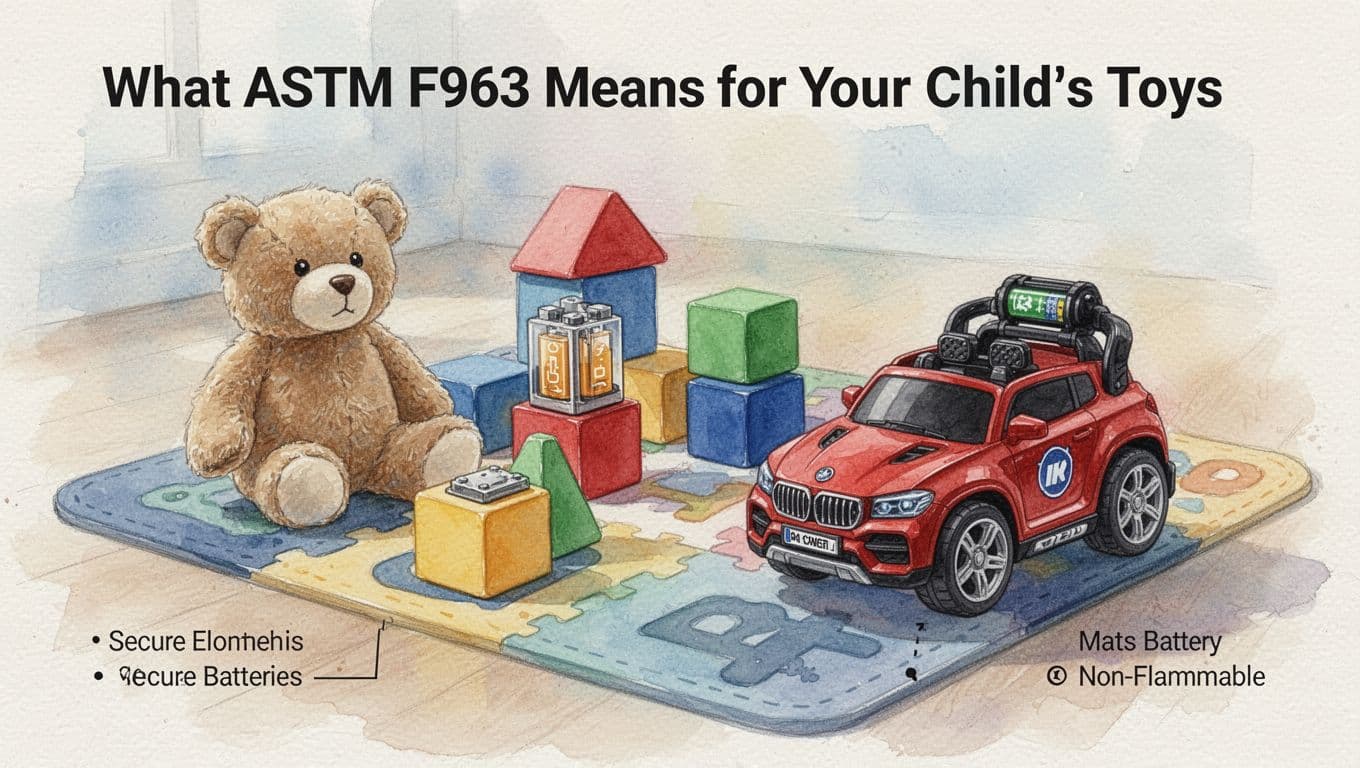
In short, ASTM F963 treats toys like systems. It checks what happens when they burn, break, release chemicals, open compartments, or produce loud sound.
Furniture and Appliance Tips to Avoid Tip-Overs and Strangles
Furniture tip-overs and strangulation hazards are the kinds of injuries that happen quietly, then turn deadly fast. CPSC rules focus on stability and on limiting cord risks, because these hazards often show up in bedrooms, living rooms, and play areas.
In addition, some rules go beyond “make it stable once.” They require stability under loaded, realistic conditions. Think of it like testing a chair while someone leans on it, not just when it stands alone.
CPSC stability tests for clothing storage units
For certain furniture types, the CPSC requires products to meet stability standards through defined testing. A key rule covers clothing storage units such as dressers, armoires, wardrobes, and similar units. The standard requires manufacturers to pass stability tests that mimic real home behavior, including open drawers, multiple access points, and forces that come from a child pulling or climbing.
CPSC adopted final requirements tied to the STURDY Act, and the effective date was September 1, 2023 for required products. That means many newer units already fall under stricter expectations.
Here are the types of CPSC-related stability tests that matter most:
- Clothing load testing: The unit must stay upright when drawers and doors open, and when it holds a realistic clothing weight load.
- Horizontal force testing: The test applies pulling forces to drawer pulls or knobs at realistic heights.
- Carpet with child weight testing: It tests how the unit behaves on carpet and under a heavy pull or hanging load.
These tests matter because tip-overs do not usually happen with the furniture empty and untouched.
Safe hinges and “door behavior” that reduces sudden failures
Even when the main issue is tip-over, the details still count. Furniture with doors and drawers needs hardware behavior that keeps it predictable. That includes safe hinge design and drawer/door restraint so the unit does not shift unexpectedly when opened quickly, pulled, or loaded unevenly.
Manufacturers should design for normal wear and for the moments when a child grabs the edge, not when you babysit every move.
Cord limits, strain relief, and what to do with cords
For appliances and powered items, cord issues usually fall into three buckets: entanglement, strangulation, and damage that creates electrical risk. The safest goal is to keep cords from becoming accessible loops.
Instead of guessing, focus on product design features:
- Durable cord insulation that resists cracking or easy damage.
- Strain relief so plugs and cord connections do not loosen from tugging.
- Safe cord routing that prevents sagging and dangling.
Be careful with “extension cord culture.” Extension cords are fine for some needs, but damaged cords or unsafe placement can turn a small slip into a serious injury.
Also, note that CPSC cord rules are often most visible for window coverings, but the safety logic carries across household cord hazards. For context on the CPSC’s cord approach in window covering rules, see the Federal Register entry on safety standard for operating cords on custom window coverings.
Anchoring laws: no, there might not be a single federal rule, yes you should anchor anyway
Some families assume, “If it passed the test, I don’t need to anchor it.” That’s not a safe assumption.
CPSC actions and education efforts strongly encourage anchoring furniture to walls, because it adds protection when kids test the limits over time. For example, CPSC’s Anchor It! campaign pushes wall anchoring for TV and furniture tip-over risk reduction. You can read about the Anchor It! Campaign’s impact.
Still, laws can vary by state and by product type. Even when anchoring is not required for every item, it often is required for new units under specific standards. And even when it’s not required, it can be the difference between “a hard bump” and a head-first fall.
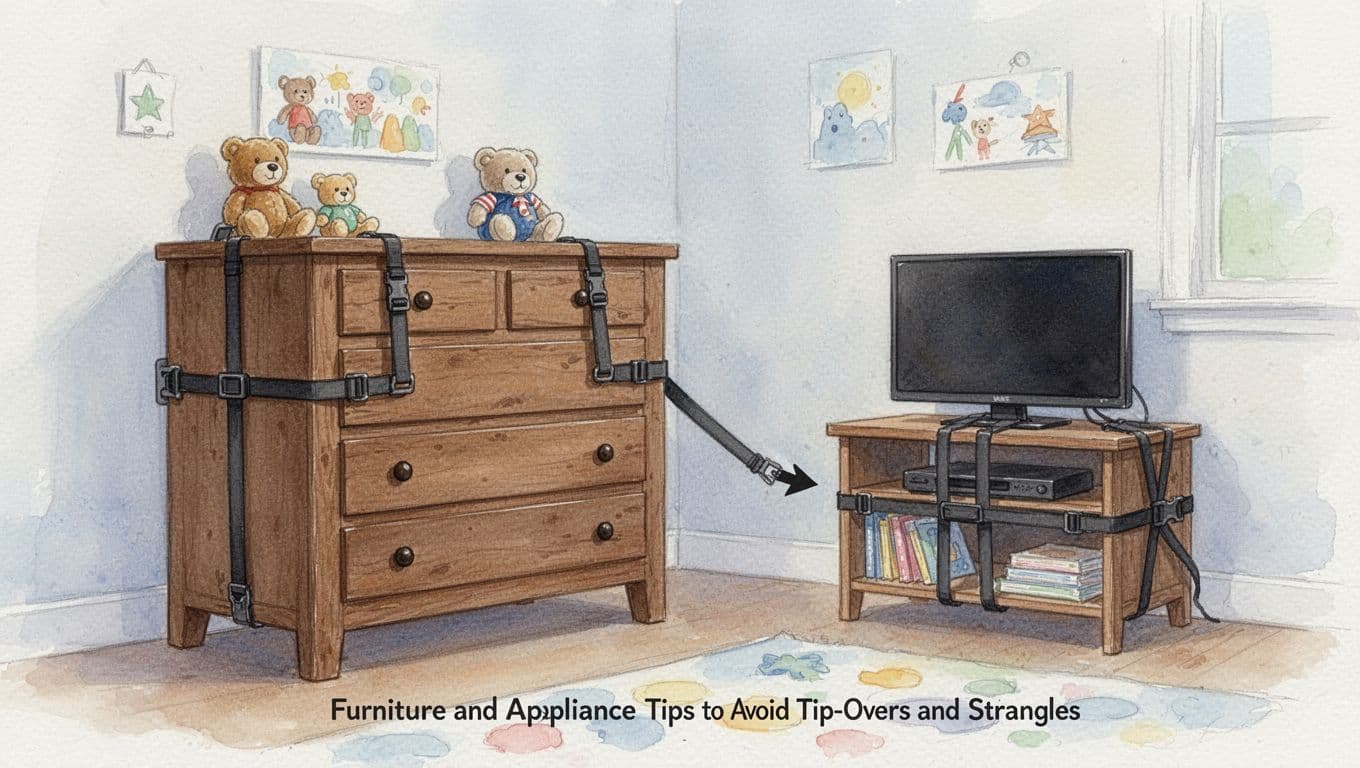
If you want a quick home rule, use this one: anchor tall furniture, secure cords, and keep top-heavy items out of reach. That approach matches how the CPSC thinks about risk, and it fits real life better than trusting luck.
Food Contact Safety and Global Standards You Should Know
Food contact materials sound simple, but the risk is sneaky. Chemicals can migrate from packaging or cookware into food, especially with heat, oil, or long storage. That is why regulators push rules around leaching, migration, and impurity limits.
FDA Guidelines That Keep Chemicals Out of Your Food
In the U.S., the FDA focuses on whether food contact materials are safe under how you actually use them. That includes contact time, temperature, and what the material holds (fatty, acidic, or watery foods). The big idea is clear: materials should not add harmful chemicals to food.
For metals, the FDA pays close attention to toxic elements and uses testing and action approaches. You can see this in FDA guidance and enforcement around lead in food and foodwares, where migration can become a real problem with certain cookware or alloys. Review the FDA’s background on lead in food and foodwares to understand what the agency looks for.
Also, imports get extra scrutiny. The FDA has issued public warnings about imported cookware that may leach lead, because not every factory uses the same materials or quality controls. Read the FDA alert about imported cookware that may leach lead.
Here’s how FDA thinking often shows up in real life:
- No harmful leaching: materials must not release unsafe chemicals into food.
- Toxic element limits and action levels: agencies target substances like lead and other contaminants.
- Import and domestic sampling: compliance programs can sample foodware to verify safety. For example, see FDA’s compliance program manual for toxic elements in food and foodware.
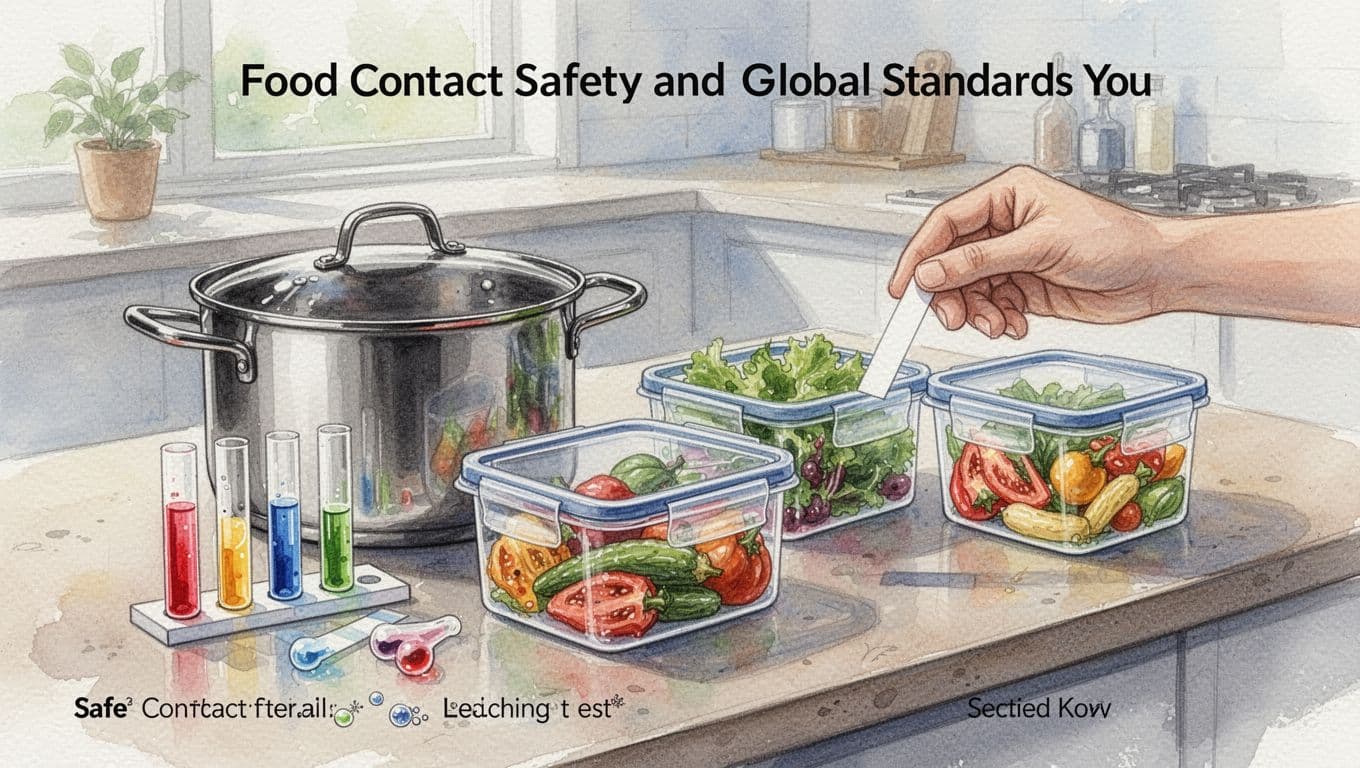
If you want a quick home rule, follow labels, avoid “mystery” alloys for cooking, and replace scratched or worn containers.
How International Rules Like ISO Affect What You Buy
Global rules often work like a set of traffic lanes for trade. Even when the U.S. and EU use different formats, they chase the same outcome: food stays safe during contact.
The EU, for example, uses Regulation (EC) No 1935/2004 to set general safety requirements for food contact materials. In contrast, many companies use ISO systems to manage quality and controls across suppliers. ISO standards can help you prove your process is stable, even when they do not replace chemical migration limits.
A simple comparison helps. Here is how common standards differ by product area:
| Product type | U.S. approach | Common international approach |
|---|---|---|
| Toys | ASTM F963 (plus U.S. toy rules) | EN71 family and ISO-aligned testing expectations |
| Electronics | UL-based safety testing | IEC safety standards used across many countries |
| Food contact materials | FDA compliance focus on safe migration/leaching | EU Reg 1935/2004 sets general safety, with migration testing expectations |
Online import scrutiny also shapes what ends up on shelves. Buyers now ask for test reports earlier, because customs and enforcement can slow shipments when paperwork or results do not match. In addition, export sellers often build compliance packs that cover multiple markets, so they can ship one batch worldwide without reworking everything.
For furniture, ISO helps harmonize stability methods, like chair stability testing under ISO 7174. For food contact, the “harmony” shows up as shared expectations around migration safety, plus supplier documentation that makes audits faster.
Recent Recalls, Trends, and How to Stay Safe
Recalls move fast, and kids do not wait. That is why 2025 and 2026 safety trends matter for how you shop today. They also show where standards are tightening, especially around chemicals, battery risks, and toys with water beads.
A good way to think about it is like weather forecasts. You do not control storms, but you can still check updates and pack what you need.
What 2025–2026 recalls are teaching us right now
Recent recall patterns keep pointing to a few repeat trouble spots. First, magnet toys still top the risk list. If strong magnets loosen, children can swallow them, then face serious gut injuries. For an example of this type of hazard, see Fat Brain’s magnet toy recall.
Next, softer “fun” products keep hitting the spotlight. Water beads are a prime example. They can expand in a body, which raises choking and blockage risks. CPSC announced new federal water bead requirements that take effect for products made after March 12, 2026, via CPSC’s water beads safety standard update.
Meanwhile, furniture recalls keep reminding parents about stability. Some kits and straps can fail over time, which turns “secure” into “not secure.” You may see these issues show up as tip-over or entrapment risks.
Finally, baby gear problems still appear in batches. For example, some gates and play items trigger recall when they do not meet safety expectations in real use.
The big trends: phthalates, lead, smart toy privacy, and battery risk
Chemical limits are getting more attention. Phthalates and lead keep showing up in testing because they can harm health over time. As a result, parents increasingly look for “non-toxic” claims backed by real compliance.
At the same time, smart toys add a new kind of risk. App-connected toys raise privacy questions, especially when they collect data about children. Look for privacy practices that align with kids’ protections, and treat unclear data policies like a warning light.
Batteries remain another high-stakes area. Button batteries can cause severe burns if swallowed. So, you want compartments that stay secure and tools that do not let small parts detach.
In short, the trend is clear: safety now means chemistry, hardware, and data behavior.
How to check recalls quickly (and act fast)
When a recall hits, your job is simple: confirm, stop use, and follow the remedy. Start with CPSC because it posts recalls in one place, using filters for hazard type and category. Use CPSC recalls and safety warnings as your first stop, especially for toys, furniture, and powered items.
Then, do a fast home sweep:
- Search your product name, brand, and model number.
- If you find a match, stop using the item right away.
- Keep the item away from kids until you fix or dispose it.
- Save packaging or photos, especially if the remedy needs proof.
Also report issues. If something seems off, you can file a report through CPSC’s system by using CPSC’s recall reporting resources.
Smart shopping habits that reduce your risk
You can shrink your risk before a recall ever happens. It starts with where you buy and what paperwork you look for.
Focus on these habits:
- Buy from reputable sellers (not random marketplace listings).
- Check labels and age range before opening.
- Look for safety marks like UL for electrical safety.
- For toys, look for the CPC (Children’s Product Certificate) when applicable.
- Avoid toys that claim big safety benefits with no details.
If you ever doubt a product, treat it like a loose screw. Tighten your decision by checking the CPSC and FDA sites before you let it into your home.
Conclusion
Safety standards in everyday products matter because they test for real risks, not just good intentions. When brands follow CPSC, ASTM, UL, FDA, and ISO safety rules, the goal stays consistent: reduce harm from choking, fire, chemical exposure, and tip-over injuries. As a result, you can shop with more confidence, knowing the product went through checks designed to catch failure points early.
Still, standards only protect you if you pay attention at home. Before use, check labels for required certificates or marks, then keep an eye on safety updates and recalls, especially for toys, furniture, and powered items. When something looks off, act fast. That small habit helps you avoid the “close call” moment that starts this whole conversation.
Next step: make recall checks part of your routine. Look up your product on CPSC.gov (and follow any remedies) as soon as a warning appears, then save the proof you need to fix or replace the item.
What’s one product category you want to double-check this week, toys, furniture, electronics, or food-contact items? If we keep demanding clear safety standards and using the tools already in place, safer products become the normal outcome for everyone.