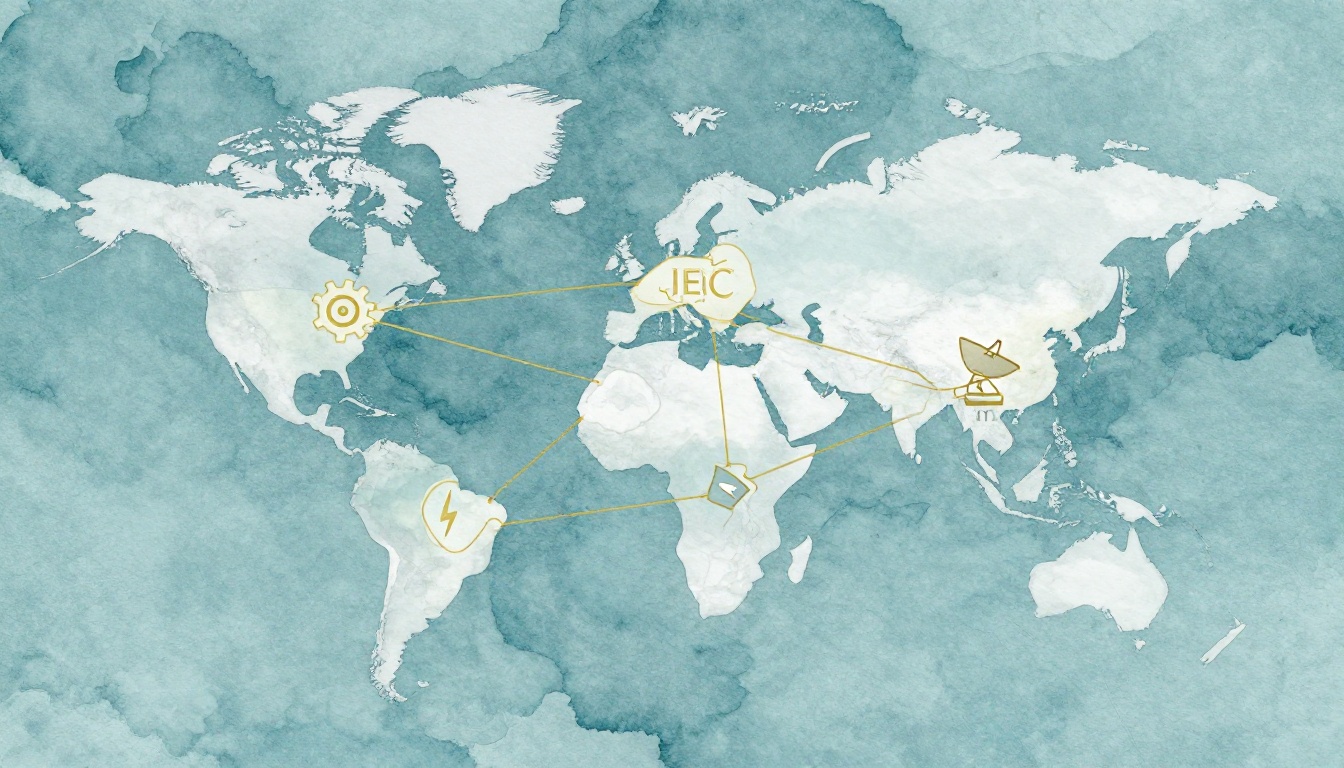
A phone charger that works safely in the U.S. and Japan doesn’t happen by luck. It happens because international standards organizations help many countries agree on common rules. If you want to understand how international standards organizations work, start with the big three: ISO, IEC, and ITU.
These groups shape day-to-day life behind the scenes. They influence how products are tested, how data is handled, and how systems connect across borders. ISO began in 1947 in Geneva, after earlier roots in 1926. IEC formed in 1906 for electrical and electronics work. ITU is the oldest, founded in 1865, and it joined the UN in 1947.
In recent years, their AI efforts have grown too. As of March 2026, they’re pushing standards for safer AI management, security, and even guidance for using AI with other media tools. The story gets clearer when you see how these organizations build consensus, not just paperwork.
Next, let’s break down what ISO, IEC, and ITU do, how they govern their work, and how a standard moves from an idea into real-world use.
Meet the Key International Standards Organizations
Think of ISO, IEC, and ITU as three specialist “coordinators” for global rules. They work closely, but each one focuses on a different slice of technology and industry.
What ISO covers (and what it doesn’t)
ISO works across many fields, from quality and safety in manufacturing to healthcare practices and information technology management. It’s also behind thousands of widely used standards that companies adopt to show they meet consistent expectations.
ISO typically does not handle electricity and telecom. For those areas, you’ll usually see IEC and ITU take the lead.
Here’s a simple way to picture it:
- ISO: broad standards for business, processes, products, and IT management
- IEC: electrical and electronic technology, including safety rules
- ITU: telecom and communications systems, from radio to internet-related work
ISO, IEC, ITU and national bodies
They’re not run like one global government. Instead, each organization relies on national standards bodies. Those bodies send experts, vote through committees, and help adapt standards in their countries.
If you want a concrete view of how ISO members work, see Members – ISO. That’s where the national representation model is explained clearly.
IEC and ISO teams for IT topics
Some topics overlap. For example, IT and cybersecurity often involve both ISO and IEC. That’s why you’ll hear about joint structures such as ISO/IEC JTC 1, which focuses on information technology.
A quick, practical example
Imagine a factory that wants more consistent output. It might adopt ISO 9000 quality concepts. Then it trains teams, documents processes, and audits results. Over time, that standard helps the factory compare performance and improve control.
That’s the value of international standards: they reduce guesswork, help buyers and suppliers align, and make trade easier.
ISO: Setting Standards for Almost Everything
ISO is the most familiar name for many people, because its scope is broad. It covers more than just manufacturing. You’ll also find work in fields like food safety practices, healthcare organization, and IT management.
A few details help you see how ISO runs:
- ISO has over 160 member countries, represented through national standards bodies
- ISO work often moves through technical committees and subcommittees
- ISO publishes standards in multiple official languages (English, French, and Russian are recognized)
You’ll also see that ISO is an independent, non-governmental organization. It’s built around member bodies and uses governance that keeps decision-making grounded in expert input.
If you want the structure and decision setup at a glance, check ISO structure and governance. It explains how the General Assembly and central coordination support day-to-day operations.
And yes, ISO’s output is huge. With 25,000+ published standards (and ongoing revisions), it’s one reason ISO standards show up in everything from contracts to compliance checklists.
IEC: Ensuring Safe Tech and Power
IEC focuses on electrical and electronic technology. That includes power systems, electrical safety, and equipment requirements that protect people and property.
Why does this matter? Because electrical systems are dangerous when the rules are unclear. A charger, a grid connection, or an industrial control panel can harm users if safety requirements differ across markets.
IEC helps prevent that by publishing standards that define test methods, performance expectations, and safety limits.
IEC also works through national committees. In the U.S., for example, IEC standards connect with national participation through organizations like NEMA, which explains how IEC work fits with U.S. involvement. See The IEC and NEMA for an easy entry point into how IEC standards show up in national practice.
One reason IEC feels more “hands-on” than ISO is that it often ties standards to physical testing. In other words, you can measure it: temperature rise, insulation strength, electromagnetic compatibility, and more.
ITU: Keeping Global Communications in Sync
ITU handles telecom and communications, which means it touches everything from radio rules to internet-connected systems.
Because signals cross borders, communications rules can’t stop at national lines. ITU helps create shared expectations so networks can interoperate and governments can coordinate on spectrum and technical behavior.
ITU includes three main sectors:
- ITU-R for radiocommunication (radio-related work)
- ITU-T for telecommunication standardization
- ITU-D for telecommunication development
ITU is also tied to the UN system, which matters for policy alignment. When rules involve global frequencies, cross-border coordination becomes part of the job.
To see how ITU membership works across governments and industry, visit Membership – ITU. It highlights how member states and organizations participate through ITU’s global network.
Unpacking Their Structure and Governance
So how do these organizations avoid chaos? The answer is structure plus governance. Even though the topics vary, ISO, IEC, and ITU tend to use similar building blocks: expert committees, consensus rules, and member-driven oversight.
You can think of it like a large group project. Experts do the heavy work. Then members check the results to make sure the outcome is fair and usable worldwide.
Technical Committees: The Heart of Standards Work
Most standard work happens in technical committees (TCs) and subcommittees (SCs). Experts join because they know the topic, not because they hold office.
Typically, the committee process looks like this:
- An issue is proposed (a gap in current rules, a new product type, or new risk)
- Experts draft requirements and scope
- The group discusses practical testing and interpretations
- Drafts get reviewed, revised, and re-reviewed
- Agreement leads to a formal consensus vote
Committee members also test logic. They ask: “If two labs test this the same way, will they get similar results?” That’s one reason standards matter. They reduce variation.
In other words, committees turn “we think it’s safe” into “we can measure it.”
Governance: Presidents, Boards, and Global Cooperation
After experts do the technical work, governance steps in. Leadership roles, board oversight, and strategic direction help keep standards development consistent.
This is where you see key principles in action:
- Non-governmental influence (especially for ISO and IEC), meaning decisions aren’t controlled by a single country
- Representation through national bodies, so countries and industries have a voice
- Voting and consensus, meaning drafts must pass through structured review cycles
It also helps that the organizations cooperate through global efforts. For example, when standards intersect with newer areas like AI and sustainability, coordination becomes even more important.
As of March 2026, AI is also pushing the pace of updates. New standards and technical reports respond to fast changes in machine learning, data use, and automation.
Standards don’t form by speed alone. They form by shared agreement, testable rules, and repeatable methods.
Who Joins and How Membership Opens Doors
Membership shapes how international standards organizations work. It also shapes who gets heard.
ISO, IEC, and ITU participation in plain terms
Most people cannot join directly as individuals. Instead, participation usually flows through national standards bodies.
- ISO has a model where each country’s standards body represents its national position. ISO membership is organized through those national bodies.
- IEC and ITU use sector and committee participation too, but the path still runs through national or organizational representation.
That doesn’t mean only big companies influence standards. Many technical experts come from universities, research groups, and trade organizations. Some companies participate because they want to ensure standards fit real product needs.
Also, membership isn’t just about having an opinion. It’s about getting access to:
- committee work and draft reviews
- voting windows and comment cycles
- the chance to propose changes as technology shifts
Why membership benefits both sides
For industry, standards reduce confusion across markets. For governments and regulators, they offer a basis for safer policy. For the public, they support products that behave consistently.
That said, consensus isn’t automatic. Participation creates the pressure to negotiate and refine the details until the group can support a common text.
The Step-by-Step Process to Create a Standard
Want to see how a standard becomes real? Follow the path from first idea to national adoption.
Here’s the flow in a clear, step-by-step way:
- Identify the need: a gap in safety, compatibility, or best practice
- Draft and test: experts write the requirements and discuss how to measure them
- Ballot for agreement: members review drafts, submit comments, and vote
- Publish as a standard: once consensus rules are met
- Adopt nationally: countries may publish it as a national version, often with local updates
Even after publication, work doesn’t stop. Standards get revised when new evidence appears or tech changes.
This whole process is one reason standards can be trusted. They go through multiple review gates. They also rely on experts who face real-world constraints.
From Idea to Proposal: Getting Started
Committees start when someone spots a problem. That might be a recurring product failure. It might also be a new market shift.
In AI, for example, the need can come from new risk types. Bias, insecure model behavior, and unclear expectations for AI operations can all drive standard proposals.
Often, the proposal stage focuses on scope. The committee asks: “What exactly should this standard cover, and what should it not cover?”
If the scope is unclear, every later step turns messy. So getting started well matters.
Discussion, Testing, and Voting for Agreement
After the first draft, discussion takes over. Experts debate wording and test methods. Then they consider how the standard will work in different countries.
Voting checks whether the final text has broad support. If comments point to weaknesses, the draft cycles back.
This stage is where consensus becomes real. The committee isn’t just chasing agreement in theory. It’s trying to ensure the standard can stand up to implementation.
If you want another perspective on how standards development works across organizations, IEEE’s explainer on How are Standards Developed? helps show how committee review fits into real-world tech.
Real-World Examples and Exciting 2026 Updates
Standards don’t live on paper. They show up in audits, procurement rules, test labs, and product specs.
Common standards people run into
Here’s a compact map of standards that often matter in real projects:
| Area | Example standard | What it supports |
|---|---|---|
| Quality management | ISO 9000 | Consistent processes and improved control |
| Information security | ISO/IEC 27000 series | Security management practices |
| AI governance | ISO/IEC 42001:2023 | AI management across lifecycle risk checks |
| Factory engineering | ISO 15745 | Guidance for factory measurement and automation needs |
| Electrical safety | IEC safety standards | Testing and protection requirements |
| Telecom interop | ITU recommendations | Shared rules for communications systems |
These examples show the range. ISO focuses on broad management and process needs. IEC focuses on electrical safety and behavior. ITU focuses on telecom coordination.
What’s new in AI as of March 2026
AI is changing quickly, so international standards work tends to cluster around safety, governance, and practical implementation.
As of March 2026, key AI-related developments include:
- ISO/IEC 42001:2023 for AI management governance, risk controls, and monitoring
- ISO/IEC TS 27103:2026, guidance for using ISO/IEC cybersecurity frameworks with AI security needs
- ISO/IEC/IEEE 26516:2026, guidance linked to instructional videos about IT systems, including AI tools
- Ongoing work tied to “trustworthy AI” goals, including human rights considerations in standards development
Also, major AI standards events have been happening:
- International AI Standards Summit 2025 in Seoul (Dec 2-3, 2025)
- Global Summit 2026 in Glasgow (Mar 16-17, 2026), focused on building confidence through standards, measurement, and assurance
- ITU AI for Good Global Summit planned for July 7-10, 2026
Meanwhile, outside the standards bodies, U.S. NIST is pushing AI agent standards work. Their AI Agent Standards Initiative aims at secure, interoperable agents, which aligns with the same “safety plus trust” direction many ISO/IEC/ITU efforts share.
Looking forward, the biggest theme stays consistent: standards help AI earn trust because they make expectations measurable and comparable.
Conclusion
International standards organizations work by building consensus through expert committees, member representation, and structured review cycles. ISO, IEC, and ITU each cover key parts of technology, from general processes to electrical safety and global telecom coordination.
If you remember one takeaway, make it this: standards reduce uncertainty. They turn scattered opinions into rules you can test, adopt, and use across borders.
Now that you know how international standards organizations work, the next smart step is simple. Look at the standards behind products you buy, and pay attention to updates in areas like AI governance and security.