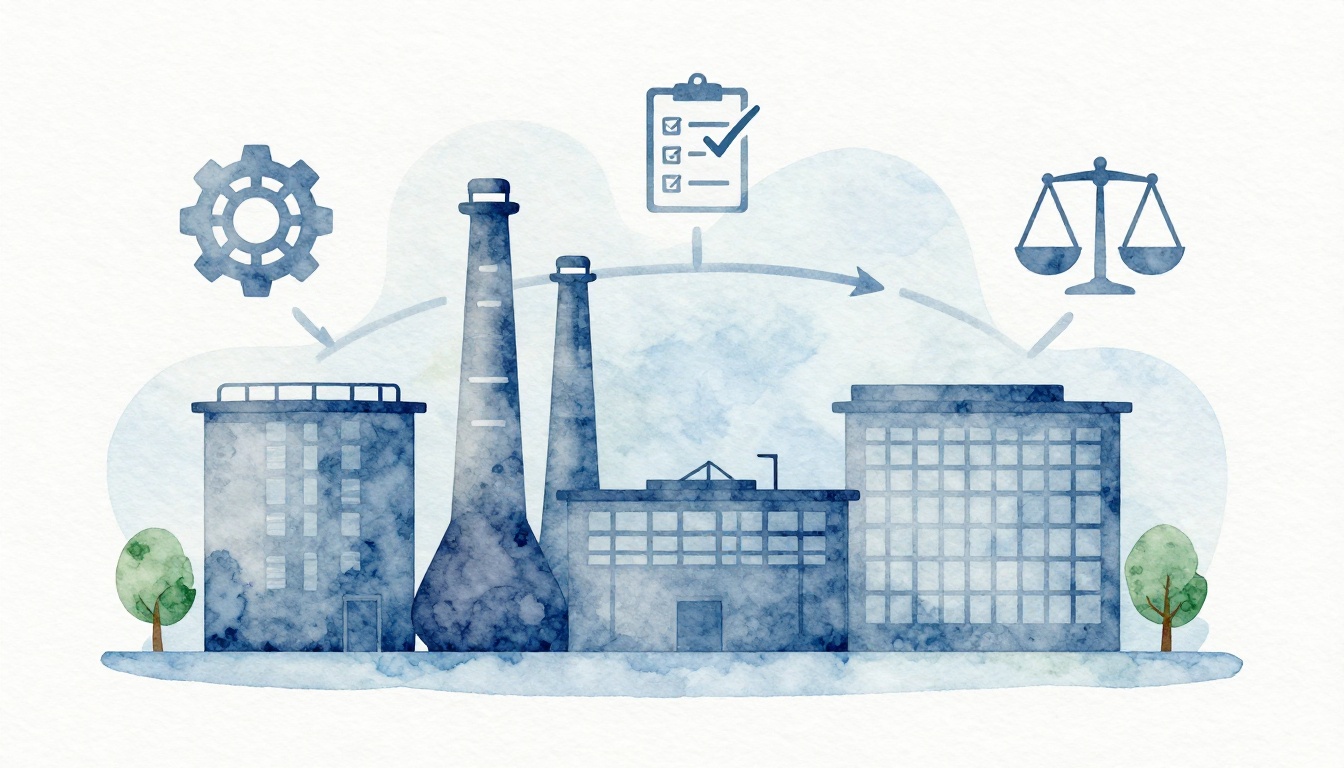
A shaky part in a car or a bland meal at a restaurant can ruin your trust fast. Quality standards prevent that kind of disappointment by setting clear rules. They help teams build products and deliver services the same way, every time. In this post, you’ll learn how quality standards work, where they come from, and how companies roll them out.
You’ll also see why this matters more in 2026, with supply chain pressure and higher customer expectations. Then you’ll get a practical, step-by-step view of implementation and certification, plus real-world pitfalls and fixes.
Breaking Down the Core Types of Quality Standards
Think of quality standards like a playbook. They don’t tell you every move, but they set the rules that keep the game fair. In business, those rules guide how companies design work, control processes, and meet customer needs and safety expectations.
Quality standards show up in different forms:
- Management system standards: These focus on how the organization runs. ISO 9001 fits here.
- Improvement methods: These focus on reducing defects and fixing process variation. Six Sigma fits here.
- Company-wide management approaches: These focus on culture and day-to-day behavior. TQM and Lean often land here.
- Industry-specific standards: These target special risks in a certain sector. For example, medical or food.
The ISO family: a common language for quality
ISO standards often act like a shared vocabulary between companies, auditors, and customers worldwide. That’s one reason ISO is so widely used.
- ISO 9000: Helps define key terms and the quality management “building blocks.”
- ISO 9001: Sets requirements for a Quality Management System (QMS). It works for many industries.
- ISO 9004: Offers guidance for improving performance beyond the minimum requirements.
And in 2026, ISO 9001 keeps evolving. Revisions in the draft stage put more weight on leadership, quality culture, ethics, and risk thinking. The draft also folds in climate considerations and adds more focus on digital tools and knowledge management.
For example, ISO 9001’s thinking is shifting from “check the output” to “strengthen how the whole system behaves.” That helps when conditions change, like new suppliers or new regulations.

Industry examples you might see
If your business sits in a regulated area, you may face standards that target specific risks:
- ISO 13485 for medical devices
- ISO 22000 for food safety
So, quality standards aren’t one-size-fits-all. Still, they follow a common logic: define expectations, control processes, prove results, and keep improving.
ISO Standards: The Global Gold Standard
ISO standards have been around for decades. They gained global reach because they’re built for consistency across borders, sizes, and industries. In practice, ISO helps companies show they can deliver stable results, not just good intentions.
What ISO 9001 focuses on
ISO 9001 is the best-known ISO standard for quality management systems. It applies to organizations of many kinds, including manufacturers, service firms, and software teams. Most importantly, it requires a QMS that supports consistent delivery, customer satisfaction, and continual improvement.
If you want a clear, official-style overview, see ISO 9001 explained.
In plain terms, ISO 9001 asks you to build a system that includes:
- leadership responsibilities and quality policy
- risk-based thinking for planning
- process controls with documented information
- measurement, internal audits, and management review
- corrective actions when something fails
What the 2026 draft adds
As of early 2026, the ISO 9001 update sits in an approved draft stage. Review coverage points to themes like:
- quality culture and ethical behavior (not just paperwork)
- clearer steps for risk and opportunities
- stronger attention to climate in the organization’s context
- more emphasis on how teams communicate with customers
- continued focus on suppliers and consistent needs
If you’re wondering what changes might look like in real life, this summary on the timeline and topics can help: ISO 9001:2026 Revision: Key Changes.
The takeaway is simple. ISO 9001 still centers on a QMS. However, it’s getting better at reflecting modern expectations around culture, risk, and real operations.
Other Powerhouses Like Six Sigma and TQM
ISO 9001 gives structure. Other methods often give speed and problem-solving power.
Six Sigma: use data to shrink defects
Six Sigma is a disciplined approach that targets process variation. It uses statistics to find what causes defects, then it reduces them. Many Six Sigma programs use the DMAIC cycle: Define, Measure, Analyze, Improve, Control.
If you want a straightforward definition and purpose, check What is Lean Six Sigma?.
Here’s a simple way to picture it. Suppose a parts maker sees scratches on finished components. Six Sigma doesn’t guess. Instead, it studies when scratches happen, what conditions trigger them, and which changes reduce them.
TQM: make improvement a shared habit
TQM (Total Quality Management) is broader. It treats quality as a company-wide responsibility, not a department job. Leadership and workers all play a part, and the culture supports continuous improvement.
A useful mental image is a habit loop. People notice issues, report patterns, test fixes, and learn. Over time, the company gets better without waiting for a crisis.
Lean: cut waste so flow gets smoother
Lean focuses on removing waste, like rework, delays, and unnecessary steps. When you pair Lean with Six Sigma, you often get both speed and stability.
In practice, many companies run ISO 9001 alongside these methods. ISO can hold the system together. Lean and Six Sigma can push results faster.
Why Businesses Can’t Ignore Quality Standards Anymore
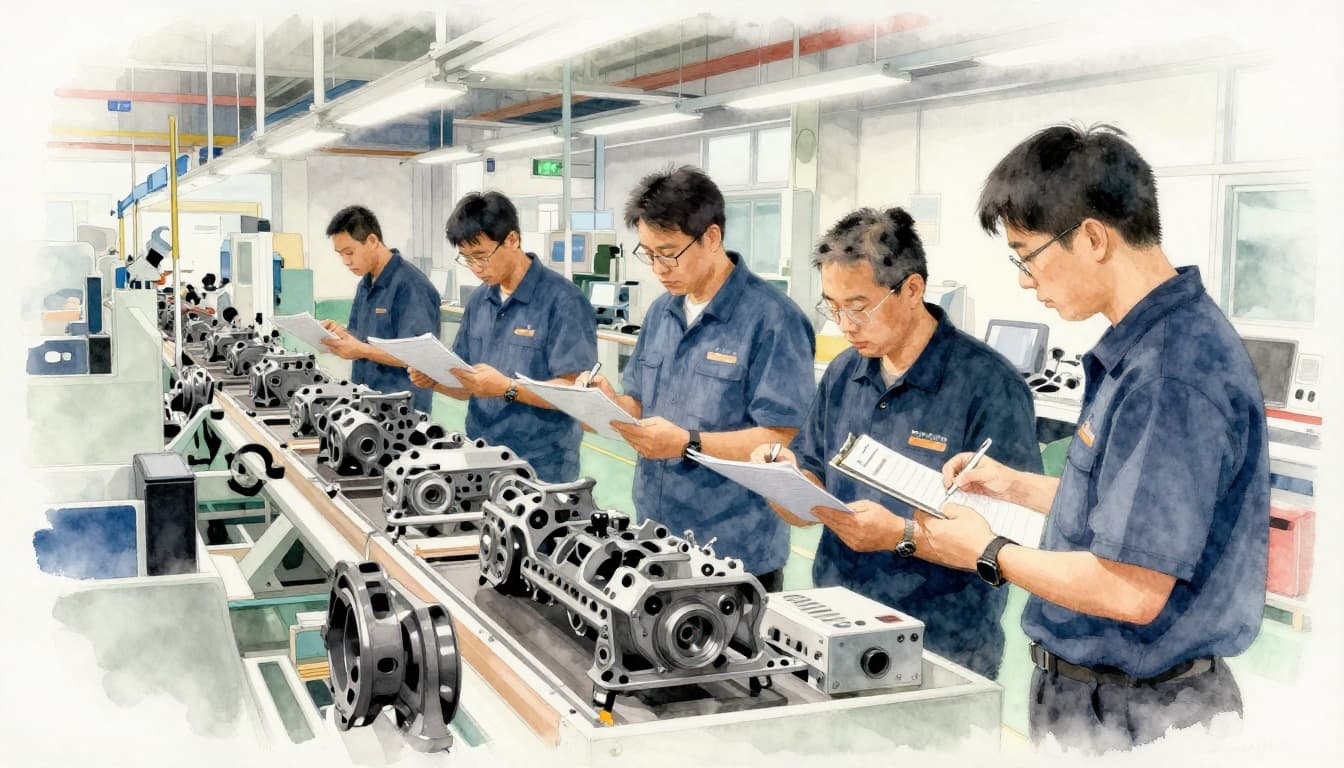
Quality standards aren’t just for big manufacturers or long-established brands. Today, they help any business that wants fewer surprises.
In 2026, buyers expect reliability. Regulators expect compliance. And teams expect clarity across systems. When supply chains wobble, quality control can’t rely on luck.
Here are the most common wins companies pursue:
- More consistent output: Processes run the same way, even when people change.
- Fewer customer complaints: Problems get caught earlier, not after shipping.
- Lower costs over time: Rework, returns, and recalls drop when defects drop.
- Stronger legal and regulatory fit: Standards help track requirements and evidence.
- Better supplier control: You can set expectations and verify performance.
- Easier global trust-building: A known standard reduces friction with partners.
As a result, quality standards can save money long-term. They also reduce the “firefighting” cycle that burns teams out.
In addition, modern pressure makes this harder to ignore. Customers ask for proof. Partners ask for audits. Many businesses now track data and risks across teams, not just in one department. Quality standards offer the structure for that work.
Step by Step: How Companies Implement and Certify Quality Standards
Most teams don’t fail because ISO is too hard. They fail because implementation feels endless. So, the best approach is to run it in phases.
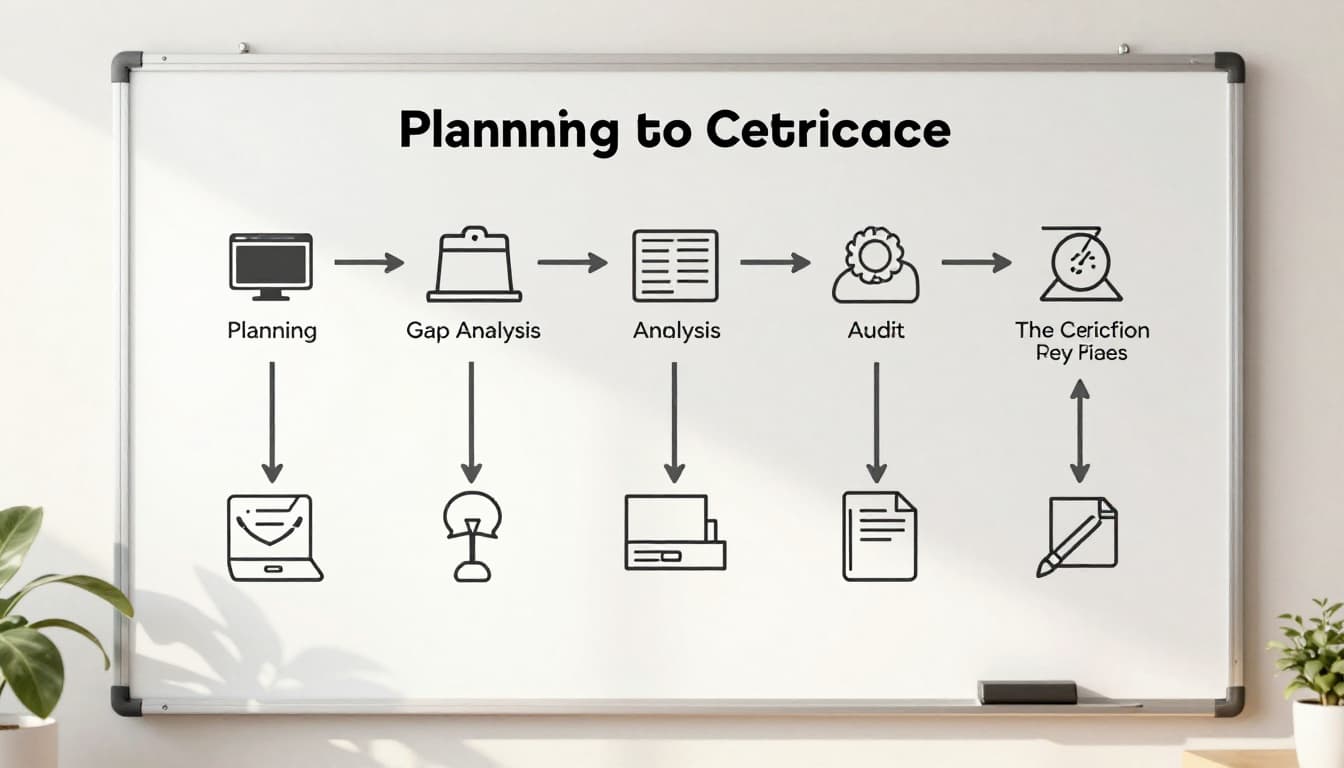
From Planning to Certification: The Key Phases
Here’s a practical, conversation-friendly path many companies follow when adopting ISO 9001 or improving an existing QMS.
- Choose your standard
- For many organizations, ISO 9001 is the starting point.
- Do a gap analysis
- Compare your current processes against the standard’s requirements.
- Write a plan, policy, and objectives
- Set roles, timelines, and measurable goals.
- Build documentation and SOPs
- Create the procedures that control how work gets done.
- Train people so they know what “right” looks like.
- Roll out and run the system
- Use the QMS in day-to-day operations, not just on paper.
- Check performance
- Track metrics, review feedback, and handle issues fast.
- Prepare for audits
- Run internal audits and close nonconformities.
Then certification comes through audit steps. Many organizations plan for:
- internal audits first, so you catch gaps early
- Stage 1 and Stage 2 audits with a certification body
- a typical three-year certificate period, with yearly surveillance checks
If you want a step-by-step implementation view, this guide can help you map the work: ISO 9001 Implementation: A Step-by-Step Guide.
Also, remember leadership buy-in. Without it, you’ll get partial compliance. With it, you get real buy-in from departments.
Staying Compliant Through Audits and Daily Checks
Certification isn’t the finish line. It’s the start of proof-based management.
Here’s what “staying compliant” usually looks like:
- Daily and weekly controls: People follow SOPs, use work instructions, and record results.
- Metrics that show stability: You track defects, turnaround time, customer feedback, or service issues.
- Nonconformity handling: When something fails, you document it and fix the root cause.
- Internal audits: These find issues before external auditors do.
- Management review: Leaders review results, risks, and improvement actions.
Audits also teach habits. Internal audits should feel like learning, not punishment. External audits then verify that you’re consistent across processes.
For continuous improvement, many teams run cycles that mirror PDCA thinking. The pattern repeats:
- plan changes
- do them
- check results
- act on what you learn
In 2026, companies often make this easier with software. Cloud QMS tools can help with document control, corrective actions, and audit evidence. They also reduce “where is that file?” confusion. However, tools don’t replace training. Staff must understand the system.
Success Stories, Pitfalls, and Fixes in the Real World
Quality standards can work fast when teams avoid common traps.
What tends to work
Companies often see results when they:
- assign clear owners for key processes
- train staff so SOPs match real work
- use data to prioritize fixes
- connect quality goals to customer needs
For culture-focused improvement, many organizations credit Toyota-style thinking. Lean and broader quality habits helped Toyota build strong process flow and reduce waste. If you want a concise example of how Lean ties to Toyota’s success, see Lean Manufacturing Made Toyota Successful.
Other success patterns show up in different settings too. Some tech and service firms use ISO 9001 to strengthen contract delivery. Some medical device teams use ISO 13485 to manage high-risk design and production controls. Food companies rely on ISO 22000 to improve traceability and safety management.
The pitfalls that slow teams down
Even with good intentions, the biggest problems usually look like this:
- Paper overload: Teams write too many documents.
- Weak training: People know the policy, but not the work steps.
- Resistance to change: Departments fear extra work.
- Metrics that don’t guide action: Numbers get collected, but no one fixes root causes.
- Tool-first behavior: Software gets bought before the process gets agreed.
Fixes that make implementation stick
The fixes tend to be practical.
First, integrate systems. Instead of separate trackers everywhere, connect corrective actions to the same metrics you review in management meetings. Next, keep documentation proportional. If a control is simple, the procedure can be short.
Also, celebrate wins. When teams fix recurring defects, recognize the people who spotted the issue. That builds quality culture over time.
The best message is simple: standards don’t replace good management. They support it, and they make it consistent.
Conclusion
Quality standards help you deliver the same quality outcome, even when schedules, staff, and suppliers change. ISO 9001 gives a solid system structure, while methods like Six Sigma and Lean often speed up problem solving.
If you want a smart next step, start with a gap check against the standard you choose. Then build the QMS in phases, train the team, and prepare for audits with real evidence.
When you treat quality standards like a living system, you stop chasing surprises. You start building a business that holds up, year after year. What quality process would you improve first if you had one month to begin?