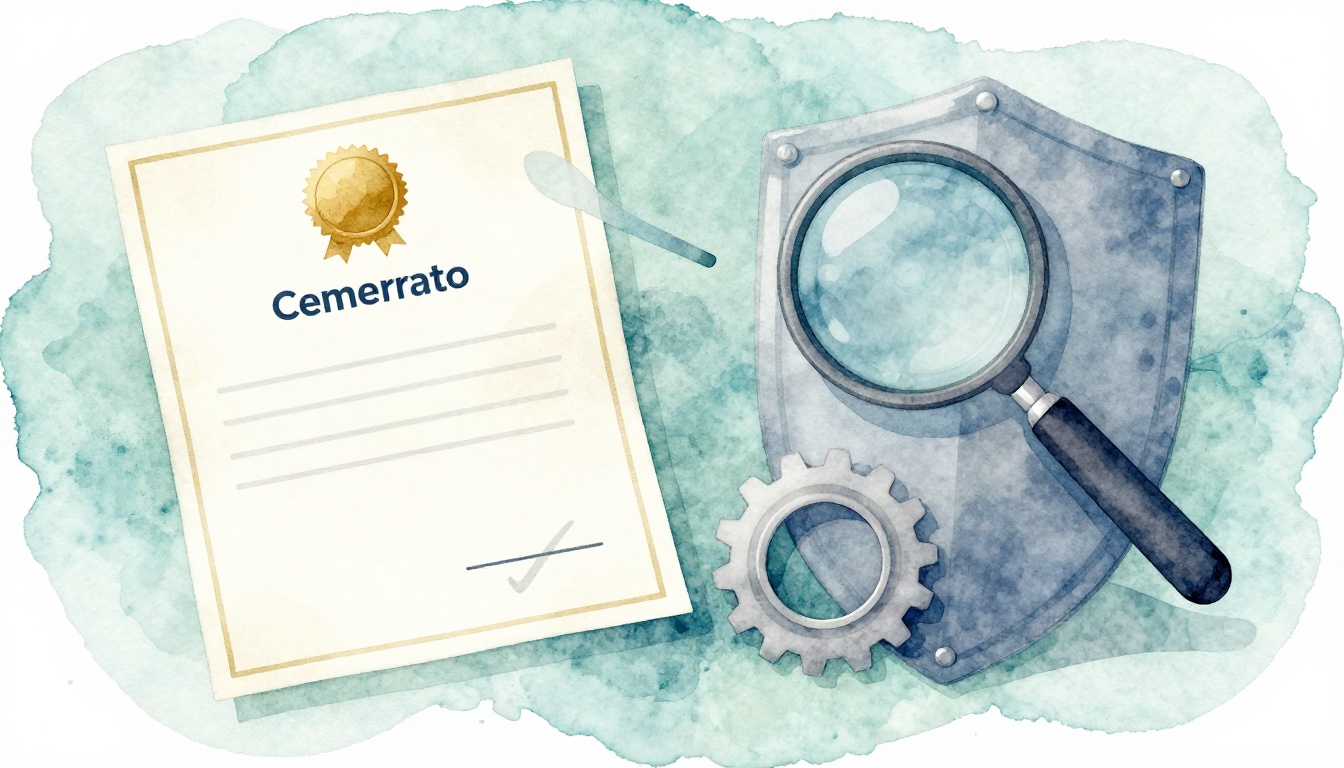
That UL mark on a charger is more than a sticker, it’s proof someone checked the safety. In the same way, certification is official proof from an independent group that a person, product, or organization meets set standards for skills, quality, or safety. It works like a trusted stamp, because it comes after tests, audits, training, or a review.
If you’re trying to stand out at work or avoid a risky buy, certification can help you make sense of what’s legit. Next, you’ll learn the main types, how the process typically works step by step, and why employers and regulators trust it (plus real examples, common myths, and what’s trending in 2026). Now let’s break down what certification actually means in practice.
The Core Definition of Certification Explained
When you hear the phrase what is certification definition, it often sounds like a title you earn once and keep forever. In plain terms, certification is verified proof that something meets a specific standard. That “something” can be a person, a product, or a service.
Think of certification like a sports referee. Players can say they played by the rules, and fans can have opinions. Still, the referee watches, checks, and makes a call based on the rules. Certification does the same kind of job, except the “rules” are quality, safety, and performance standards set in advance.

What certification means in real life (and why standards matter)
Certification means an official body reviews evidence, then confirms that requirements are met. That review may include testing, document checks, on-site audits, interviews, or process reviews. Because standards stay the same, you get a clearer way to compare options.
Standards matter for a simple reason: they turn “trust me” into verifiable proof. For example, if a building product claims it’s safe, certification can show that claim got tested against the same rules as similar products. Likewise, when a worker says they have the right skills, certification can back it up with proof from an outside assessment.
Also, certification often focuses on repeatable performance. It’s not just about passing once. Instead, it checks whether the process stays consistent.
First-party, second-party, and third-party checks (the real difference)
People sometimes assume certification means “the same company approves itself.” However, the source of the check changes everything. You can think of it as who holds the whistle.
- First-party certification: The seller or provider checks itself. For example, a producer may test its own product and claim it meets a standard. This can be helpful, but it may not feel fully trusted.
- Second-party certification: Another group connected to the seller checks it. Often, this is an industry association or trade group. The standards may be clear, but the relationship can still be close.
- Third-party certification: An independent organization verifies it. This is usually the most trusted approach because the checker has no direct stake in the outcome. Kiwa explains how these types differ and why independence matters (what is first, second and third-party certification?).
If you want the “most reliable” meaning of certification, look for third-party involvement and clear standards.
The key idea is simple: certification is not self-approval. It is verification backed by outsiders.
Does certification ever expire?
Yes, many certifications do expire, especially when skills and safety needs change over time. Some expire because standards get updated. Others expire because organizations want proof of ongoing control, not one-time approval.
In many quality settings, audits help keep certifications current. ASQ breaks down how auditing fits into quality systems and why it supports ongoing assurance (what is an audit?). Even when the certification holder stays qualified, they may need periodic review, renewal paperwork, or follow-up testing.
So, when you see certification mentioned, always check:
- What standard it refers to
- Who certified it (first, second, or third party)
- When it was issued and whether it needs renewal
Three Key Types of Certifications and What They Cover
Certifications come in different shapes, but they usually answer the same question: Does this person, product, or organization meet a set standard? The best choice depends on what you want to prove and who wants to trust it.
Think of it like sorting tools into the right toolbox. If you grab the wrong one, you might still get work done, but you’ll fight the process. Next, you’ll see three common types, what each one covers, and who issues them.
Professional Certifications to Boost Your Career
Professional certifications focus on skills verification for people. Typically, you earn them by combining training with an exam, or you prove experience through a structured review. After that, employers can look at your credential and expect a certain level of knowledge and performance.
In many fields, renewals keep the certification current. You might complete education hours, earn credits, or retake an exam every 1 to 5 years. That renewal rhythm matters, because tools and rules change, and your credential should not get outdated.
Here’s what professional certifications often cover:
- Core technical skills (for example, help desk, networking, or cybersecurity basics)
- Job-ready best practices (how you apply knowledge, not just definitions)
- Ethics and compliance (especially for finance, healthcare, and regulated work)
- Hands-on readiness signals (practice labs, case reviews, or exam scenarios)
A few well-known examples can help you picture the format:
- CPA: Common for accountants who want credibility with tax, audit, and financial reporting work. Many CPAs renew through continuing education requirements.
- CompTIA A+: A common entry credential in IT, built around exam-based proof of skills in hardware, networking, operating systems, and security. You typically follow the program’s recert rules to stay active.
- Google Analytics credentials: Often used by marketers and analysts to show they understand measurement, reporting, and optimization.

If you’re job hunting, professional certs work like a resume filter with receipts. They don’t replace experience, but they can help you get considered for interviews faster.
As a quick reality check, review an employer’s job posting before you invest. Demand and renewal costs vary by role. You can also scan general lists of in-demand certifications for direction, such as in-demand career certifications.
Product Certifications for Everyday Safety
Product certifications focus on items you can buy and use. In practice, they tell you a product has passed specific checks for safety, performance, or quality. This kind matters to your day-to-day life, because it reduces risk when you plug something in, cook with it, or carry it around.
Most product certification programs involve testing by an approved body. They may check materials, electrical safety, labeling rules, fire resistance, food safety controls, or durability limits. Then the product can carry a mark that signals compliance.
In the US, a major example is electrical safety testing connected to UL. If you’ve seen a UL mark on a charger, power strip, or appliance component, that’s the idea in real life. It’s a visible shortcut that still stands for real testing behind the scenes.
Common areas product certifications cover include:
- Electronics and electrical equipment (shock risk, overheating, wiring safety)
- Appliances and consumer devices (durability, safety under normal use)
- Packaged food and ingredients (processing and handling controls)
- Sustainable or ethical sourcing (for example, certain fairness and traceability programs)
One reason these marks matter is simple. Packaging can look polished, but it can also blur risk. Product certification helps separate marketing from verification.
If you’re evaluating a product claim, check whether the certification relates to the exact product category you’re buying. A “similar” certification might not mean the same thing. For safety-focused examples, you can explore UL’s consumer product program information at UL Verified Mark for consumer products.

For food and sourcing claims, look for certifiers that match your goal. If your focus is ethical sourcing, Fair Trade programs are often used as a signal to buyers. You can start with Fair Trade USA to see how that certification model works and what it covers.
Industry Certifications for Company Standards
Industry certifications focus on organizations, not just individuals or products. They help companies show they run their processes the right way, repeatably and with oversight. Often, these certifications apply across a whole sector, so customers and regulators can expect consistent standards.
In factories and service operations, this type can influence everything from workflow design to quality checks. It’s like setting building codes for how work gets done. A code helps reduce defects, improves reliability, and lowers the chance that each shift improvises differently.
A strong example is ISO 9001, which centers on a quality management system (QMS). Instead of checking one batch or one product, ISO 9001 pushes the organization to build a structured system. That system typically includes documented procedures, performance monitoring, internal reviews, and continual improvement.
You’ll often see industry certifications used for:
- Quality control consistency (fewer mistakes, better traceability)
- Process documentation and audits (clear responsibilities and records)
- Customer satisfaction goals (how the organization handles requirements)
- Continuous improvement routines (fixes based on measured results)
In many industries, the certification becomes part of procurement decisions. Customers want suppliers who follow known standards. As a result, industry certifications can help businesses win contracts, not just look credible.
Here’s a simple way to choose the right type. If you’re trying to prove you can do a job, pick a professional cert. If you’re choosing or building a product, focus on product certification. If you manage operations and need a process-wide standard, look at industry certifications like ISO 9001.
If you want a practical explanation of ISO 9001’s role in manufacturing quality, this overview from ISO 9001 explained for manufacturing quality can help you connect the dots.
The Certification Process: Your Step-by-Step Roadmap
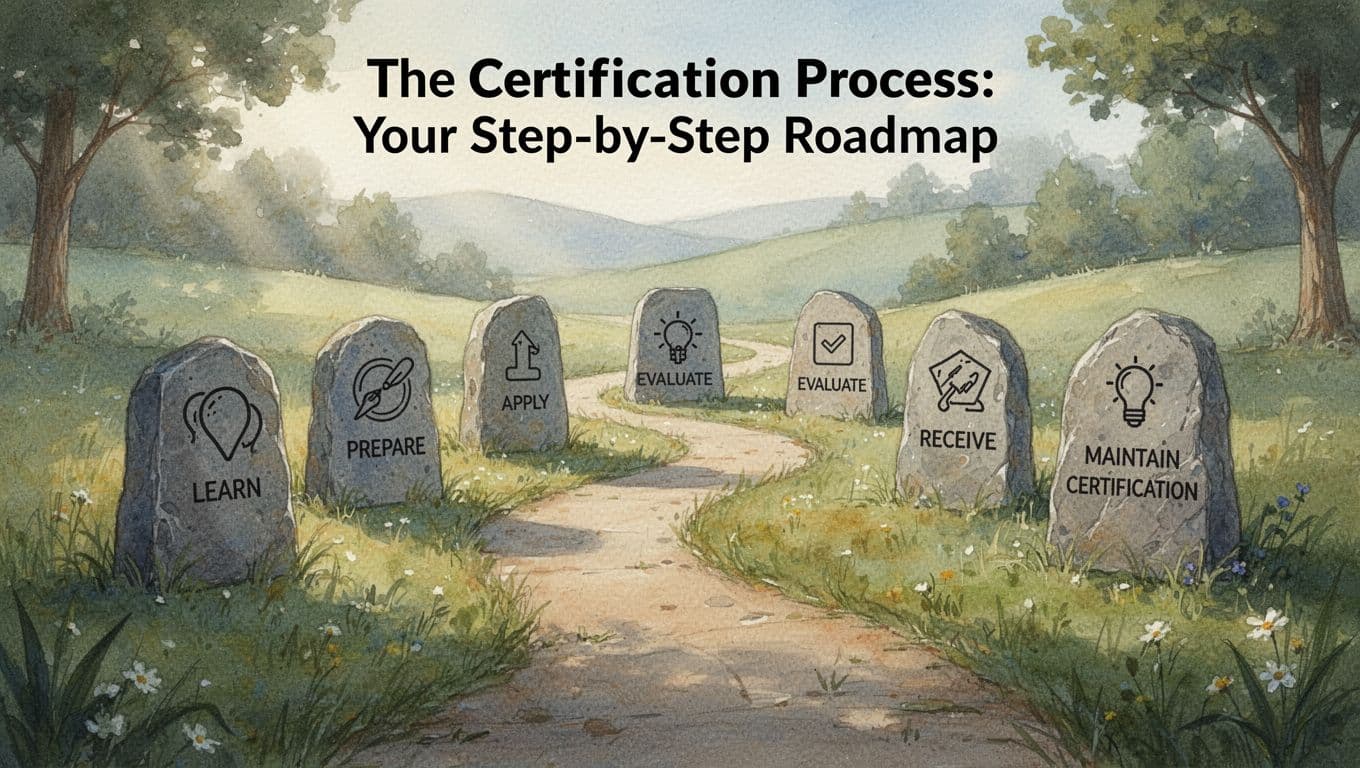
If you’re wondering how does certification work step by step, think of it like building a house with inspections. You learn the rules first, prepare your materials, get checked by someone independent, then you receive the go-ahead. After that, you keep meeting the standards, not just the day you pass.
Below is a practical roadmap you can follow, whether you’re certifying a person’s skills or certifying a product or system. The details change by industry, but the flow stays familiar.
Step 1: Learn the requirements from the certifying body
Start by reading the exact requirements from the certifier. Not from a friend. Not from a random forum post. The certifying body’s document tells you what counts, what doesn’t, and what evidence you must provide.
Look for answers to questions like these:
- What standard or regulation applies to your certification?
- What education, training, or work history do you need first?
- What exam format or assessment method will they use?
Also check timelines and deadlines early. Many people lose time because they prepare for the wrong test date or submit outdated forms. If a term feels unclear, ask for written clarification before you spend money.
For product or safety-related certifications, you may also need to understand the applicable test method. For example, safety marks in the US often link to NRTL-style testing and ongoing inspections. That classification step matters because it tells you which standard applies.
Step 2: Prepare and train (courses and experience)
Next, you build what the certifier will evaluate. This is where you turn knowledge into proof.
For people certifications, preparation often includes:
- required training courses
- supervised experience or logged hours
- practice exams (if allowed)
For products, preparation may include building to the correct design specs, gathering technical documentation, and getting ready for testing. If your process is messy, the certification process will expose it.
A key tip here is simple: no shortcuts. If the rules say you need specific training hours or a particular test setup, skipping it usually backfires. Budget extra time for revisions too. Most certifications involve at least one round of adjustments.
Step 3: Apply and get assessed (exams and third-party audits)
Now you apply and enter the evaluation stage. This is where certification becomes real, because someone checks your work against the standard.
Depending on the type, assessment can look like:
- an exam (written, practical, or both)
- a lab test (for product safety and performance)
- a third-party audit (for organizations and systems)
This is also where independent verification matters most. If a third party runs the test or audit, you reduce the risk of “self-approval.” In other words, the certifier is the referee, not the player.
If you’re aiming for a quality system credential, you’ll often face evidence reviews, internal controls checks, and process documentation audits. If you’re certifying a product, testing and traceable records usually come first. Either way, bring complete documentation. Missing paperwork delays decisions.
Step 4: Pass the evaluation
Passing sounds straightforward, but don’t treat it like a single moment. You typically pass when all required criteria meet the standard, not when you “almost” meet it.
If you fail, you still learn something valuable. Many certifying bodies provide feedback on what blocked your result, so you can fix it and reapply. That’s better than guessing and hoping.
Keep your focus on what you can control. Study the weak areas. Improve the steps that failed. Then submit again with stronger evidence.
The fastest path is often the one that follows the rules clearly the first time.
Step 5: Receive the certificate (some expire, some don’t)
After you pass, you get your certificate or approval letter. In many cases, you can start using the credential right away, but you should confirm the exact rules for display and marketing claims.
Some certifications last for a long time. Others require renewal. For professional credentials, renewals might depend on continuing education or periodic re-checks. For products, approvals can require continued compliance based on ongoing manufacturing controls.
If you’re dealing with product compliance, always ask what happens next. For example, certain consumer product safety rules tied to the CPSC include specific certification and filing steps for importers, and those requirements can change over time. Staying current keeps you from surprises at the border.
Step 6: Maintain it with ongoing education and updates
Finally, certification isn’t “set and forget.” Maintenance is how you keep trust from slipping.
For people certifications, maintenance often means continuing education, training hours, or periodic recertification exams. For organizations, maintenance can mean annual audits, ongoing process checks, and documented updates to keep your system aligned with the standard.
For product certifications, maintenance can involve repeat testing, factory follow-ups, and tracking any design changes that could affect compliance.
Your goal is consistency. Treat certification like a bike tune-up. You don’t ride once, then ignore the chain. You keep everything working so the credential stays valid.
Action tips to get started (without wasting time)
If you want a clean start, use these practical tips before you pay for anything:
- Verify the exact standard and the certifier’s assessment method.
- Collect required documents early (work history, training records, technical files).
- Build a timeline back from the exam date or audit window.
- Keep communication in writing if anything changes.
- Follow third-party verification rules closely, since that’s the trust piece.
When you follow these steps in order, the process stops feeling mysterious. Instead, you get a clear checklist, a clear timeline, and a clear path to certification. For additional reading on how certification steps break down in practice, see Certification steps: a comprehensive guide.
Unlocking the Benefits: Why Certification Pays Off
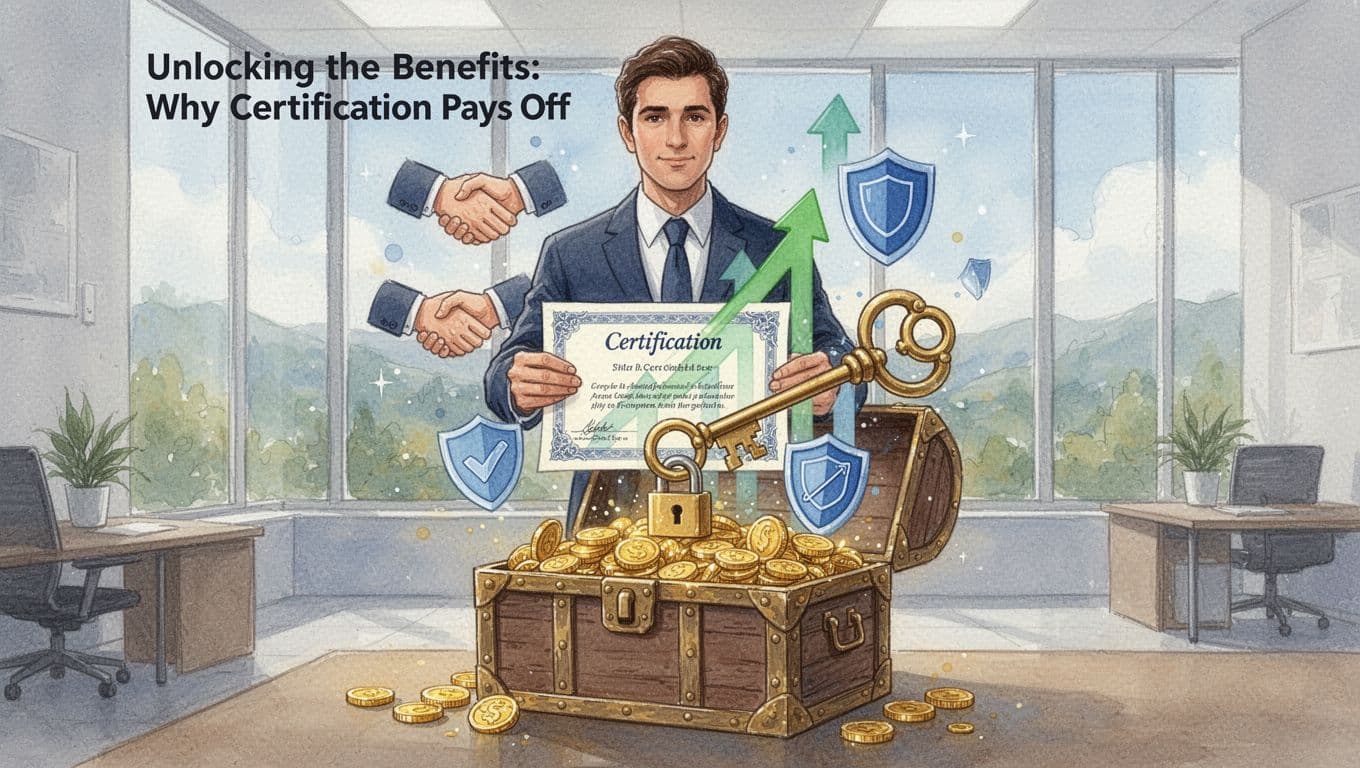
Certification often feels like extra work at first. Then, when doors start opening, you realize it was the work that mattered. It can improve your job chances, strengthen trust, support your salary goals, and keep you aligned with safety and compliance rules.
Better pay and stronger job offers
For many roles, certification works like a shortcut to clarity. Hiring teams can spot your verified skills faster, especially when they need someone who can handle real tasks, not just “learn later.”
Recent reporting also points to clear outcomes. Certified workers often earn more than their uncertified peers, with some fields showing meaningful boosts. In the US job market, employers have a lot of open roles that require proof of competence, not just interest.
Here’s what that can look like in real life:
- Higher starting offers because you match the role requirements sooner
- Faster callbacks when your resume includes recognized credentials
- More role options when you pivot to a new specialty
If you want a smart ROI view, check an example like CareerBldr’s analysis of certification value in 2026: Professional certifications ROI analysis.
Credibility, compliance, and safer decisions (for you and your customers)
Also, certification builds trust in two directions. First, it reassures employers that you can do the job safely. Second, it reassures customers that you follow rules, standards, and tested methods.
When certification applies to products or company processes, it can also support sales. A recognizable quality mark often acts like a shorthand signal that someone checked the safety and requirements.
In business terms, a certification can help you win because it reduces guesswork. It supports compliance expectations, and it makes conversations easier with procurement teams. For example, US-specific guidance on how seals influence customer decisions is covered in 10 ways a seal of approval influences customers.
The payoff isn’t the certificate alone, it’s the proof behind it.
Real-World Examples and Myths to Avoid
Seeing certification in action makes it easier to trust what it means. At the same time, a few common myths can steer you wrong, especially when you are choosing training, buying products, or picking a vendor.
Real examples you can recognize (professional, product, and industry)
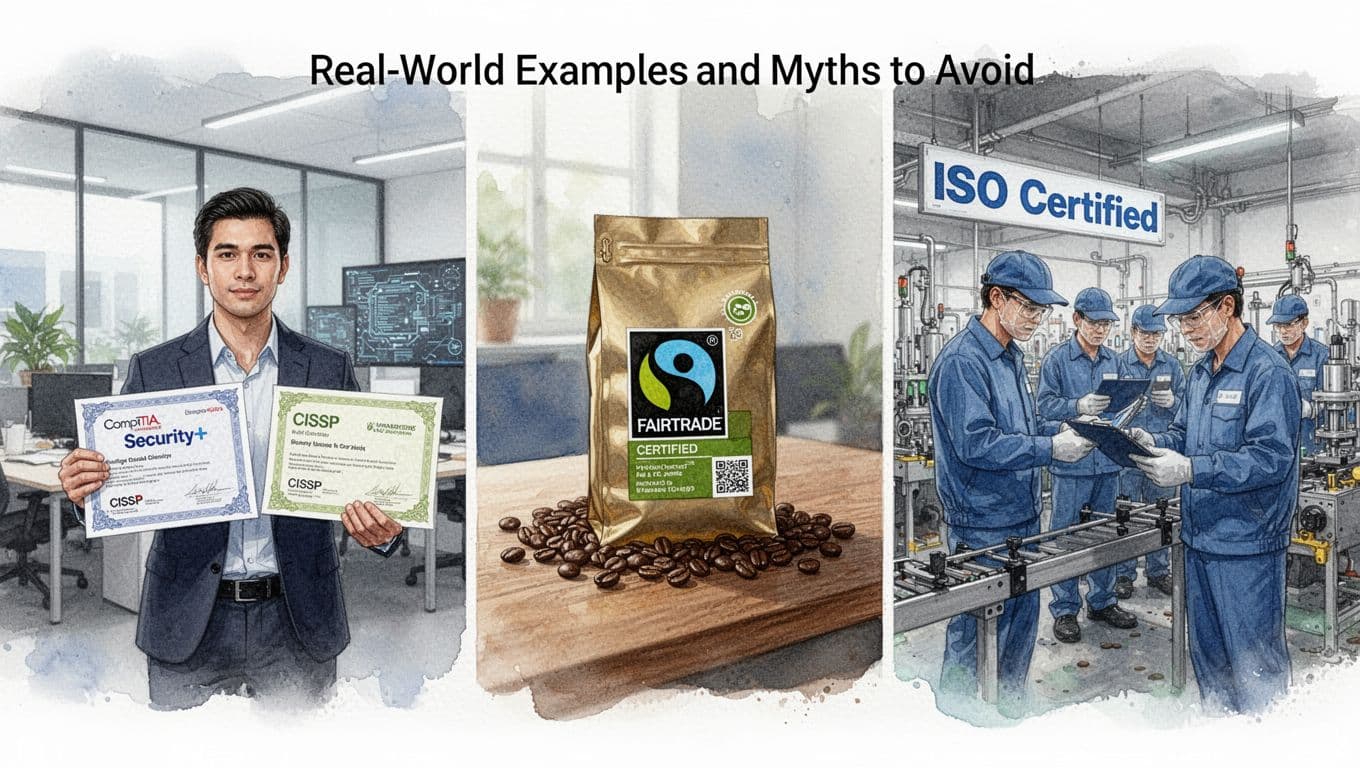
Start with professional certifications. CompTIA Security+ is widely used as a skills signal for entry-level cybersecurity roles, like SOC analyst work. It also helps some experienced pros move toward higher goals, including CISSP, which is often treated as a standard for experienced security leadership.
Next, think about product certifications. Fairtrade is a good example of a product-related claim. It supports a specific set of sourcing and sustainability rules, and it typically shows up on food and drink items. If you want to see how Fairtrade shows up in the real market, check Fairtrade-certified products you can buy.
Finally, industry certifications show up in company systems. ISO 9001 focuses on quality management processes, not one single inspection. Organizations use it to prove they run repeatable methods for planning, control, and improvement. If you want real-world context, browse ISO 9001 case studies and examples.
Myths that can cost you money (and what’s true instead)
Here are the most common mistakes people make:
- Myth: “Certifications are just a degree, training, or class certificate.”
Truth: Certifications usually require an assessment. Many include exams or third-party verification. - Myth: “Experience alone is enough, so certs don’t matter.”
Truth: Experience matters, but certification can prove skills faster. It gives employers a standardized way to compare candidates. - Myth: “Once you get it, you keep it forever.”
Truth: Many certs expire or need renewal. Rules change, tools change, and standards keep updating. - Myth: “If I paid for it, I can certify myself.”
Truth: Strong certifications come from an independent evaluator. If there is no real check, it’s not the same thing. - Myth: “A certification guarantees a job or big pay raise.”
Truth: It can help, but it does not replace fit. Hiring still depends on role needs, real skills, and practical experience.
Keep one rule in mind: certification is proof, not a promise.
Trending Certifications Shaping 2026 Careers
In 2026, certifications will feel less like “extra credit” and more like your career proof packet. Employers want skills they can trust, especially in AI, cloud, cybersecurity, projects, and sustainability. At the same time, remote work stays in demand, so credentials that map to practical roles matter more.
The big shift is simple. Many hiring teams now scan for recognizable, tested signals first. Then they confirm details in interviews. If you choose the right credential, it works like a flashlight in a dark hallway, it shows you exactly where you fit.

AI and Machine Learning credentials that match real hiring
AI roles keep growing, but employers still want clear proof you can build and run systems. That’s why AI-focused certifications stay high on “popular certifications 2026” lists. They show you understand data pipelines, model work, and cloud deployment.
Google Professional Machine Learning Engineer is a common pick for engineers who want to prove they can design, build, and deploy machine learning solutions. It’s also a strong bridge if you already work with data and want to move closer to model ownership.
If you prefer training routes through Microsoft and Azure, Microsoft Certified: Azure AI Engineer Associate can fit well. It targets AI development tasks on Azure, so it aligns with teams that deploy AI on that platform.
For data-focused roles that feed AI projects, Google Cloud Professional Data Engineer is another practical choice. Many teams need people who can structure data for analytics and ML work.
Short online options help too. Many providers offer bootcamps, guided labs, and exam prep tracks that you can complete in weeks, not years. Pair that with hands-on projects in a cloud sandbox, and you’ll have something concrete to talk through.
For ROI context, you can compare viewpoints like Most Valuable IT Certifications in 2026: Ranked by ROI. Use it as a starting point, then sanity-check it with your target job titles.
Cybersecurity certifications that stand up to pressure
Cybersecurity hiring stays steady because threats never pause. So the credentials that signal fundamentals and real experience keep popping up in job descriptions.
CompTIA Security+ often acts like the entry ticket. It helps you stand out for roles like security analyst, IT security specialist, and help desk paths that move toward security.
If you want an advanced, widely recognized credential, CISSP is one of the strongest options. It often suits experienced security professionals, especially for governance, risk, and security program leadership.
Meanwhile, ISC2 Certified in Cybersecurity (CC) offers a newer route that fits beginners and career changers. It can help you build a base faster than going straight into highly specialized exams.
If you lean toward auditing and risk work, CISA can match that angle. Remote compliance and governance roles often care about audit thinking, not just tool use.
Here’s a quick way to pick. Ask yourself what your next job actually says:
- “Monitor and respond” points to Security+ and SOC paths
- “Lead security programs” points to CISSP
- “Start in security” points to ISC2 CC
- “Audit and risk” points to CISA
If you want a shortlist view, explore Best Cybersecurity Certifications 2026: 14 Credentials Ranked by Salary & ROI. Then confirm the scope matches what your resume already shows.
Cloud architect credentials for remote-ready careers
Cloud certifications keep winning because cloud skills show up everywhere, from AI platforms to security setups. Also, cloud roles fit remote teams well since you can work with systems across regions.
For AWS, AWS Certified Solutions Architect – Associate is a popular baseline. It proves you can design solutions with the right tradeoffs.
On the Microsoft side, teams often look for Azure Solutions Architect Expert. That fits larger Azure environments and people who can handle complex architecture.
For multi-cloud and AI-adjacent teams, Google Cloud Professional Cloud Architect is a strong choice. It aligns with roles where you design platforms and data services.
If you want an easy on-ramp, AWS Cloud Practitioner helps you learn the basics and talk cloud without sounding lost. Then you can stack the deeper architect credential later.
Remote work adds a second layer. You should be able to explain your design choices clearly. Build mini case studies as you study. For example, explain how you’d secure storage, route network traffic, and manage access.
If you like salary and pay mapping, check Highest Paying Tech Certifications in 2026. Use it to spot which credentials employers reward, then focus on fit.
Project management credentials for AI, cloud, and teams
Even the best technical work fails without coordination. That’s why project management certifications still matter for 2026 careers, including remote roles where communication is the real glue.
PMP (Project Management Professional) remains one of the most recognized options. It fits managers and leads who run complex projects, including tech initiatives and cross-team rollouts. If you want to move into leadership, PMP often helps.
If your organization wants strict structure, PRINCE2 can match. Many employers value its clear method for planning and control.
For agile teams, Professional Scrum Master (PSM) fits work in sprints and cross-functional delivery. Remote teams also depend on agile routines, because they reduce confusion week to week.
Short online options help with speed. Many learners complete exam prep, practice exams, and study groups on the web. After that, apply your learning to a real project at work, even if it’s small. Your goal is to connect the credential to outcomes.
Think of project management like a flight plan. The tech is the plane. PMP, PRINCE2, and Scrum are how you keep it on course.
Sustainability and renewable energy credentials with staying power
Sustainability credentials keep rising because laws, reporting, and procurement requirements keep growing. Employers now ask for proof you understand environmental systems and reporting rules, not just good intentions.
LEED Green Associate (and LEED AP) remains a top option for green building roles. It helps you understand design, construction, and performance standards tied to sustainability goals.
For a wider operations lens, ISO 14001 supports environmental management. It’s useful in manufacturing, facilities, and organizations that need structured control over waste and emissions.
If your path goes toward reporting and compliance, CSRD and ESG-related credentials can matter. These help with how organizations track impacts and publish required disclosures, which often connects to renewable energy and energy transition work.
What’s the best part? Many sustainability roles allow hybrid or remote support, especially for reporting, data gathering, and documentation. Then, you can pair those tasks with project work for extra value.
To see how people think about certification value, browse resources like 5 Certifications That Boost Careers in 2026. Then, focus on the specific job titles you want.
How to choose a “popular certifications 2026” path without wasting time
You don’t need every credential. You need the right next one. That means matching the cert to the job you want, then checking your timeline.
Start with a simple selection filter:
- Target job title: write it down
- Core skills in that role: list the top 5 tasks
- Credential alignment: does the cert test those tasks?
- Renewal load: will you keep it active?
- Study time: can you finish within your current schedule?
Next, build a fast upskill plan:
- Pick one core cert (AI, cloud, cyber, or project).
- Add one support skill, like a short course or lab series.
- Create one project artifact, a diagram, report, or case write-up.
- Practice explaining your work in plain language.
If you’re unsure where to start, begin with a credential that matches your strongest current skill. Then pivot outward. For example, if you handle IT support daily, Security+ can be your bridge. If you already manage data, Google Professional Data Engineer can pull you toward AI systems.
Conclusion
Certification is verified proof that people, products, or organizations meet clear standards. It works because an outside group checks evidence, then you maintain compliance over time. That’s why it builds real trust, not just a label.
You’ve also seen the pattern across types, pro, product, and industry, plus a common process from requirements to assessment to upkeep. When you pair the right credential with your goal, it can strengthen hiring chances and support safer, more confident decisions.
If you’re ready to move, pick one certification that matches the job you want next, then start prepping this week. Which credential fits your path right now, and what step will you take first (study plan, exam date, or required documents)? Share your choice and your timeline in the comments, and keep building toward the AI and cloud skills that employers keep asking for.