
Your charger works in most countries, even when the outlet shape changes. Why? Standards quietly set the rules. They help products and services behave the same way across borders.
But who really decides those rules? It’s not one “global boss.” Instead, several expert groups draft guidance, debate details, and publish agreed methods.
In practice, global standards come from a team effort. Many standards bodies work through expert committees. Then most countries and companies adopt those standards because they make trade easier and safety simpler.
Why Global Standards Matter in Your Daily Life
Think about how frustrating it would be if every phone used a different connector. Even worse, imagine if each country ran its own safety tests from scratch.
That’s what global standards prevent. They act like traffic rules for products and tech. When the rules are shared, you get fewer surprises. You also get more trust, because safety and quality checks follow known methods.
Here are a few everyday ways you already benefit:
- Charging and power fit together: Electrical and appliance standards help plugs, outlets, and couplers work as intended. For example, IEC 60884-1 covers general requirements for plugs and socket-outlets used in homes. You can see how detailed that work gets in IEC 60884-1:2022.
- Food and services stay safer: Standards guide quality and risk control. When firms use the same management approaches, defects drop. If you’ve ever trusted a “best by” system, you’re seeing the impact of shared methods.
- Web tech behaves consistently: When standards match across browsers and devices, pages load the way people expect. W3C helps drive those shared web rules (more on that next).
- Trade gets smoother: Companies don’t want to redesign everything for every market. With shared standards, products can travel more easily.
Most importantly, standards reduce chaos. Without them, each shipment might arrive with a new surprise. A charger could fit, but fail safety checks. A document format could open on one system, but break on another.
Still, global standards are not magic. They’re written by experts. They also change as technology changes. ISO, for instance, describes standards as “internationally agreed” by subject-matter experts. You can explore the range on ISO’s standards overview.
ISO alone has published more than 23,000 standards. That scale matters because businesses use them to design, test, and manage work. When those methods spread, they touch everyday life, even if you never read a standard.

Meet the Key Organizations Shaping Worldwide Rules
So, who decides which standards get used globally? In most cases, no single organization “chooses” for everyone. Instead, standards bodies build rules through consensus.
That’s why it helps to picture a team. Each group focuses on a different type of work. Some cover products. Others cover electricity. Others cover internet protocols. Still others cover measurements or health guidance.
Also, many standards stay voluntary. Yet they’re still powerful. Why? Because governments, regulators, and buyers often refer to them in laws and contracts. When that happens, “voluntary” turns into “expected.”
Here are the major players you’ll see again and again.
ISO: Covering Everything from Food to Factories
When people say “global standards,” they often mean ISO first. ISO, the International Organization for Standardization, creates standards that apply across many sectors. That includes quality systems, environmental management, food safety approaches, and more.
A big reason ISO matters is the way companies use it. Take a quality management standard like ISO 9001. Many organizations use it to structure how they plan work, manage risk, and improve results. Even if you never hear the ISO name, the process can show up in how products get made and serviced.
ISO’s process also spreads knowledge across countries. Expert groups from member countries help propose drafts. They also debate what should be changed, and they vote on the final text. That gives you a mix of perspectives, not just one local point of view.
ISO’s broad scope is also why it becomes a “common language” in business. A factory in one region can use ISO guidance that a partner already understands. As a result, audits and supplier checks become more consistent.
ISO’s standards count is huge, too. That’s part of its influence. More standards means more chances to align methods across industries.
IEC and ITU: Powering Tech and Connections
While ISO covers many kinds of standards, IEC focuses on electrical and electronic technologies. Its work can affect everything from household appliances to components inside devices.
This is where you see the technical backbone for compatibility and safety. For example, IEC standards help define how plugs and sockets should work, and what requirements apply for safe connections. That’s one reason chargers and power adapters follow rules that are easier to trust.
Next comes ITU, the International Telecommunication Union. ITU helps shape standards for telecom networks and radio systems. It also supports international coordination so communications systems can work across regions.
If you’ve ever wondered why calls, networks, and signal systems have shared expectations, ITU guidance helps explain part of it. You can review ITU-T outputs on ITU-T Recommendations.
Here’s the key idea: ISO, IEC, and ITU often complement each other. ISO and IEC can cover product and system requirements. ITU covers how communication systems connect and operate.
W3C, IETF, and Others for Digital and Niche Needs
Not all standards live in factories. Some help the internet run.
W3C (World Wide Web Consortium) focuses on web standards. Think about how browsers interpret HTML, CSS, and other web technologies. When W3C guidance is followed, the web stays more consistent across devices. You can see W3C’s work at W3C.
Then there’s IETF, which helps define internet protocols like the ones that keep data moving. Without shared protocol rules, networks would struggle to agree on how to format and deliver data.
You’ll also see smaller, mission-focused standards groups:
- BIPM helps define and maintain measurement units. That matters for science, industry, and safety testing.
- WHO publishes health guidance. It doesn’t work like a product test standard, but it influences how countries handle health-related issues and risks.
Even though these bodies vary, their role is similar: experts agree on methods so people can build, test, and verify work in a shared way.

How Do These Groups Actually Agree on Standards?
Standards don’t get written in secret. They come from a structured process.
That process looks simple from far away. In reality, it’s detailed work among experts. Different countries bring different needs. Industries push for workable rules. Regulators care about safety and enforcement.
Because of that, standards often improve over multiple drafts. People challenge assumptions. They ask what happens in edge cases. Then they revise until the text can survive wide use.
Here’s the basic flow most major standards bodies follow:
- Proposal: A new standard gets proposed. Experts identify the problem it should solve.
- Drafting: A working group writes the first draft. It includes definitions, requirements, and testing ideas.
- Review and comment: Member bodies and stakeholders review the draft. They suggest edits or raise risks.
- Voting: Committees vote to approve changes. In many cases, drafts must reach broad support.
- Publication and maintenance: The final standard gets published. Then it gets reviewed over time as tech changes.
There’s also a difference between “drafting a standard” and “using a standard.” Publishing is only step one for real-world impact. Countries and companies adopt standards through procurement choices, laws, and contract requirements.
Another point matters too. Standards bodies usually aim for consensus. That means they try to balance different national needs and industry constraints.
That also explains a common tradeoff. Consensus helps fairness, but it can slow updates. If a technology shifts overnight, the standard cycle may not keep up. Still, the slower pace creates stability, and that stability reduces risk.
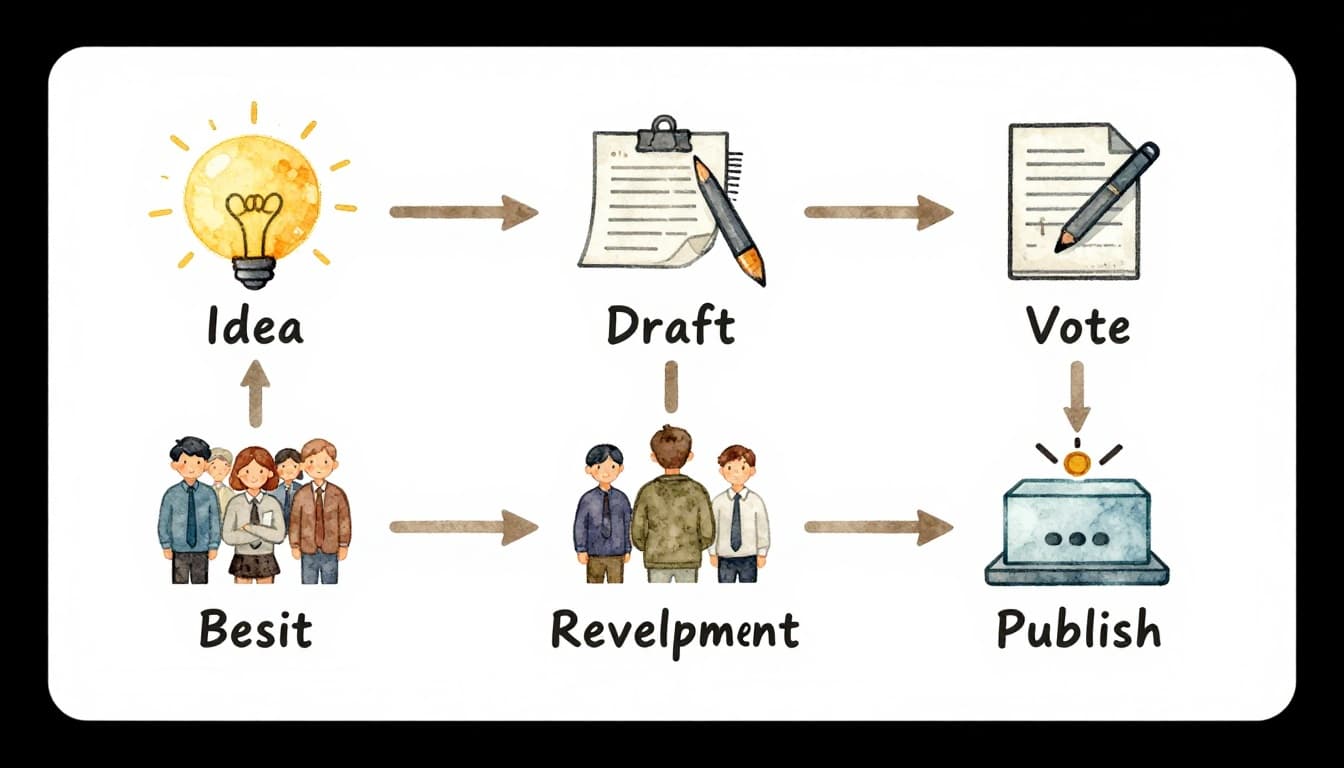
Bottom line: standards bodies decide the rules, but adoption happens through countries, regulators, and businesses.
Challenges and 2026 Changes in Global Standards
Even with strong consensus processes, global standards face real hurdles.
First, countries don’t all start from the same place. One country might push for strict safety rules. Another might focus on cost and local manufacturing. As a result, drafts can become negotiation documents, not just technical documents.
Second, enforcement is uneven. A standard may be widely used, yet nobody can force compliance everywhere. Some rules get “locked in” through laws, while others remain best practice.
Third, technology moves fast. Digital and AI tools shift faster than many standards cycles. So standards groups often update existing standards instead of inventing new ones from scratch.
Now, what about 2026 changes and the U.S. situation?
In 2026, the U.S. made moves to withdraw from multiple international organizations and agreements. The White House published a January 2026 action directing withdrawals from certain international organizations and treaties. It’s summarized in this White House memo on 2026 withdrawals.
However, that kind of change doesn’t automatically mean ISO, IEC, or ITU “fall apart.” Recent reporting and monitoring still point to active U.S. involvement in the core standards bodies. In addition, the U.S. has shown leadership activity around ITU leadership in 2026.
So the best way to understand 2026 is this: the U.S. may tighten participation in some UN-linked coordination groups, while still engaging in major technical standards work.
At the same time, ISO and IEC are updating standards to match modern needs. For example, inspection-related standards tied to how independence is assessed are getting revised. ISO 9001, the quality management standard, is also moving toward a new edition later in 2026. Meanwhile, machine safety standards keep adjusting definitions and safety principles.
What’s the overall effect? Companies will need to align training, audits, and documentation with updated expectations. Yet they’ll also benefit from clearer rules and more practical certification approaches.
The trend is clear: standards are moving toward more digital methods for evidence and audits. That doesn’t remove human review, but it can reduce paperwork and speed up updates.
Bottom line: a global decision with many owners
So, who decides which standards are used globally? Several expert organizations make the rules, and then countries and companies decide which ones to use.
ISO and IEC shape standards for products, services, and management systems. ITU supports telecom and network coordination. W3C and IETF keep web and internet behavior consistent. Meanwhile, measurement and health groups handle specialized needs.
That team approach is why your charger works across borders, and why safety testing can mean the same thing in many markets.
If you want a simple next step, look up the standards mentioned in products you buy, or check ISO’s catalog for topics that match your work. Which standard do you wish people talked about more, and why?