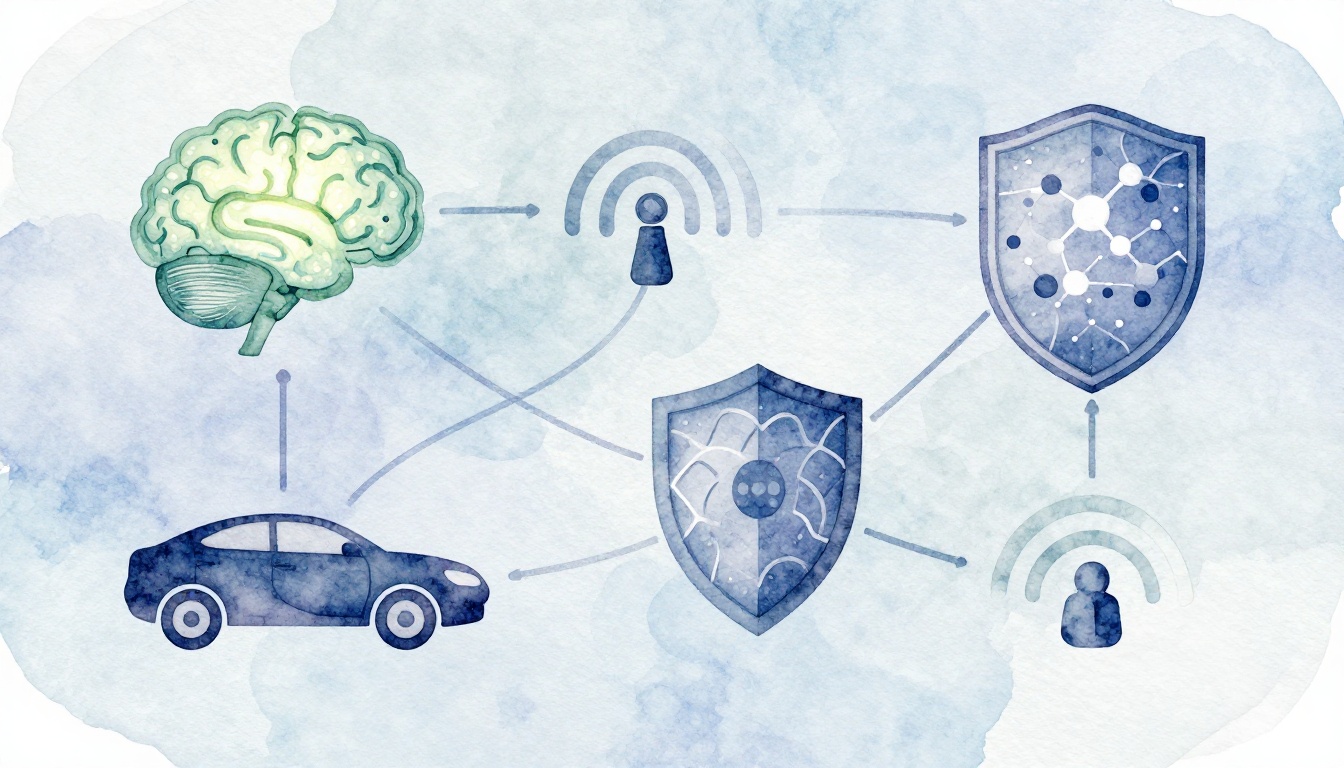
AI that talks back, cars that drive themselves, and apps that spot scams in seconds all change fast. So the technology standards evolution behind them has to keep up. Otherwise, safety rules lag behind real-world use.
That’s where standards matter. In plain terms, standards are shared rules and test methods. They help different tools work together. They also protect people by setting expectations for security, privacy, and reliability.
Right now, the biggest shifts show up in AI governance, cybersecurity, and a wave of new tech like quantum computing and next-gen networks. In this guide, you’ll see how standards are changing as these systems spread, with updates through March 2026, and why it matters for trust.
Ready to see how standards are keeping up?
How AI Standards Are Building Trust in Smart Systems
Standards for AI are moving from “good intentions” to “measurable expectations.” For example, NIST released an updated AI Risk Management Framework (AI RMF 1.1) on March 18, 2026. The update focuses on the MEASURE function. That means organizations should track performance metrics, monitor bias and fairness, and plan ongoing checks.
So what does that look like in real life? Imagine an AI helper for benefits eligibility. Standards push teams to define what “good” means, then measure whether the system stays fair after updates and new data.
Meanwhile, NIST also pushed agent-focused work. NIST launched an AI Agent Standards Initiative through CAISI, aimed at making AI agents safer and more compatible across platforms. AI agents can take actions on their own, so risk grows quickly when you connect them to real systems.
For teams adopting smart systems, another key step is better testing. In March 2026, the General Services Administration (GSA) and NIST announced a partnership for standardized ways to test and evaluate AI used by the federal government. Their goal is common benchmarks so agencies can compare tools consistently.
And monitoring keeps getting sharper. NIST also released NIST AI 800-4 on March 9, 2026. The report highlights six monitoring areas, including security monitoring and human factors monitoring (how users understand the output).
In short, AI standards are becoming a safety net people can inspect, not just a slogan.
NIST’s Push for Reliable AI Agents
Agentic AI raises a specific question: if an AI can act, how do you control it? That’s why NIST’s CAISI work matters. The AI Agent Standards Initiative is built around interoperability and security concerns, not just performance.
NIST points to three goals. First, it wants industry-led standards and a stronger US role in global standards talks. Second, it supports open-source work on shared protocols. Third, it studies how to improve agent security and trust.
The initiative also gathered public input in March and April 2026. NIST asked about AI agent security concerns and about how to identify and authorize AI agents properly. The public comment period on agent security closed on March 9, 2026.
If you’re building or buying agents for real operations, the practical message is simple. You need standards for how agents get permission, what they’re allowed to do, and how you detect misuse.
For direct details, see AI Agent Standards Initiative | NIST. You can also review NIST’s announcement of the initiative in Announcing the “AI Agent Standards Initiative” for Interoperable and Secure Innovation | NIST.
Finally, agent standards connect to the real world. Robots, factory tools, and on-call service assistants don’t run in a lab. They touch power, data, and physical environments. That’s why reliability standards start to include security and authorization, not just accuracy.
When an AI agent can take actions, authorization becomes as important as intelligence.
Making AI Explainable and Accountable
Trust doesn’t come from magic. It comes from answers you can check.
Explainability standards are becoming more practical. Instead of only asking whether an AI can justify output, teams must design how people understand it. That includes clearer user communication and better logs for review.
NIST’s March 2026 monitoring report helps frame this. Human factors monitoring shows up alongside security monitoring and compliance monitoring in NIST AI 800-4. That means monitoring isn’t only about results. It’s also about whether users can spot wrong output and know what to do next.
Accountability is the other side of the same coin. Accountability standards push organizations to assign responsibility for AI behavior. That includes documentation for how models work, how risks were assessed, and how updates change performance.
In media and education settings, accountability gets even harder. AI can shape what people see, learn, or share. So teams need ways to explain why content appears and how the system stays within rules.
This is where standards work across groups matters. Shared references for AI in different domains, including media and broadcast use cases such as ISO/IEC/IEEE 26516:2026, are pushing the industry toward consistent expectations. The key benefit is simple: teams can build safer systems while reducing confusion across vendors.
When an AI system can explain itself in user-friendly terms, people can hold it responsible. And when logs support audits, accountability becomes more than a policy document.
AI in Robots and Smart Cities
Smart cities feel futuristic. Still, many deployments run on very real needs: road planning, grid reliability, public safety response, and building maintenance. In all those settings, AI must work across tools, sensors, and vendors.
Standards push interoperability, meaning different systems can exchange data and actions safely. That matters for robots used in grid maintenance. A robot might inspect an area, detect issues, and then request a repair workflow. If it can’t fit into the local system rules, it can’t operate safely.
Standards also support safer updates. Smart-city systems change over time. Sensor upgrades, new models, and new data sources can shift behavior. Monitoring guidance helps teams spot drift, bias, and unexpected outputs.
NIST’s emphasis on testing also helps here. When organizations use common evaluation approaches, they can compare agent behavior under similar conditions. That improves safety decisions before deployment.
In addition, smart-city projects often involve multiple stakeholders. That makes standardized security expectations more important than ever. You can’t secure one component and ignore the rest.
In short, AI in robots and cities needs standards that cover action, monitoring, and cooperation across systems, not just model accuracy.
Cybersecurity Standards Shifting to Zero-Trust Protection
Cybersecurity standards are also evolving. The main shift is zero-trust. Instead of trusting anything inside your network, zero-trust checks again and again.
In a zero-trust model, authentication happens per request. Access is limited by least privilege. Devices must meet health requirements. Activity gets monitored continuously. Tools like MFA (multi-factor authentication) and segmentation support these checks in day-to-day operations.
The reason standards are changing is obvious. Breaches often start with a small mistake, then spread. Firewalls help, but they can’t stop every path. With zero-trust, a stolen credential can still fail to gain broad access.
In February 2026, ISO published ISO/IEC TS 27103:2026. It provides guidance on using existing ISO and IEC standards in cybersecurity frameworks. The goal is to help organizations apply well-known controls in a structured way.
You can view the official spec page at ISO/IEC TS 27103:2026 – Cybersecurity. This helps teams understand how the technical guidance fits into broader security plans.
Zero-trust and related guidance also map well to modern regulations. For example, the US federal ecosystem often aligns guidance with NIST Cybersecurity Framework thinking. ISO TS 27103 helps connect the dots using ISO/IEC building blocks.
What about the UK? As of March 2026, there were no clear reports of new UK-specific data center laws tied to that month. Still, organizations should check official UK government sources, because local rules can change with enforcement and sector policy.
If you manage security for apps like banking portals, zero-trust helps you reduce the blast radius. A failed login attempt stays a failed attempt. Compromised access doesn’t automatically turn into full system access.
What Zero-Trust Means for Your Data
Zero-trust is easy to explain and hard to implement. The “easy” part is the idea: never assume trust. Every access request needs checks.
In practice, that means your controls work like a bouncer at a busy club. Even if someone’s already inside, you still verify their request. Then you grant only what they need.
So the big change from older models is ongoing verification. Instead of a single perimeter gate, you get repeated checks. Those checks include user identity, device trust, and access permissions.
When organizations standardize these checks, they reduce gaps between teams. IT, security, and app owners start working with the same expectations.
Also, zero-trust supports better auditing. Because access decisions get logged, you can investigate incidents faster. That’s a major win for incident response and compliance work.
AI Tools Fighting Cyber Attacks Smarter
AI and cybersecurity standards are converging. Not because AI “solves” security. It doesn’t. But because AI can help teams respond faster.
With good standards in place, AI tools can support tasks like:
- Prediction: flaging suspicious behavior patterns early
- Faster patching: helping teams prioritize fixes based on risk signals
- Isolation: limiting access if an account or device shows signs of compromise
Standards matter because they define what “good” looks like. They also guide how to monitor outcomes. That way, AI security tools don’t become untracked guess machines.
In March 2026, organizations also had fresh guidance on zero-trust style steps, including an approach that starts with a primer and discovery phases. The point is to map data, apps, assets, and access paths, before you turn on strict controls. That reduces surprise outages and improves rollout safety.
When you combine those process standards with zero-trust technical guidance, AI tools can help you reduce breaches. And because monitoring is continuous, you can catch new threats as they appear.
Standards Racing to Catch Up with Quantum, 6G, and Green Tech
New technology creates new failure modes. And standards usually show up after enough people get burned.
Quantum computing is a good example. It can speed certain computations, including tasks that affect cryptography. That puts pressure on encryption strategies. As a result, security standards increasingly point toward post-quantum cryptography planning, even before quantum machines become widely practical.
However, you should expect uncertainty. For many emerging areas, there aren’t firm, universal standards yet. Instead, organizations build shared roadmaps and interim guidance.
Then there’s 6G. The shift from today’s networks to faster, more connected systems changes how devices authenticate. It changes how data moves. It can also expand requirements for latency, resilience, and security for smart infrastructure.
Green tech adds another layer. Sustainability goals now overlap with technology requirements. That means standards for measurement and reporting become part of the engineering conversation. Teams need consistent ways to track emissions, energy use, and lifecycle impacts.
Blockchain is often discussed in this mix too. Some teams use it for audit trails or transparency. Still, data privacy rules can limit what’s practical. So standards work needs to consider both trust and privacy.
Even in areas like autonomous driving and AI-heavy robotics, the pattern is similar. Safety depends on reliable rules, testing, and interoperability across vendors.
In other words, standards evolve when tech gets real-world reach. Then, safety and fairness become measurable needs.
Quantum Computing’s Security Hurdles
Quantum security challenges start with encryption. Many common cryptographic methods could weaken if large-scale quantum computing becomes practical.
So standards work shifts from “upgrade encryption once” to “plan migration now.” That planning includes inventorying where crypto is used, setting timelines for replacement, and testing how new algorithms behave under real workloads.
It also affects AI security, because AI often relies on secure data pipelines. If data protection changes, model training and deployment also change.
Because timelines are uncertain, standards often focus on risk-based steps. Teams can’t wait for a perfect moment. Instead, they prepare in phases.
6G, Blockchain, and Sustainable Innovations
6G will likely bring more connected devices, more edge computing, and more automation in network management. That increases the need for standardized security and performance testing.
Blockchain and privacy will also collide. Some uses need transparency, while privacy rules limit what can be shared. Standards in this area usually focus on clear roles, governance, and data handling.
Meanwhile, green tech standards focus on measurement. If you can’t measure emissions or energy use consistently, you can’t compare systems fairly. That’s why sustainability reporting and energy accounting standards matter alongside security.
As for smart cities, these trends overlap. A city uses sensors to track waste and traffic, uses networks to move data, and uses AI to turn data into actions. Interoperability and privacy standards become the glue across all those layers.
Top Organizations Driving These Changes
Standards don’t appear by magic. They come from organizations that coordinate research, testing, and public input.
Key players include NIST in the US, ISO and IEC internationally, and industry groups tied to engineering and media. Within ISO and IEC, bodies such as ISO/IEC JTC 1/SC 27 (security techniques) and SC 7 (systems and software engineering) help shape how teams implement trustworthy systems.
IEEE also plays a role in engineering-focused standards. And for broadcast and media contexts, groups like ATSC connect technical rules to real transmission needs.
The big benefit of these orgs is interoperability. When standards align across regions and vendors, teams can move faster. They can also reduce “one-off” security gaps between systems.
NIST and ISO Leading AI and Cyber Efforts
In 2026, NIST showed how AI standards can shift from theory to execution.
- AI RMF 1.1 updated on March 18, 2026, adds clearer MEASURE guidance for metrics, bias tracking, and monitoring schedules.
- AI Agent Standards Initiative launched in early 2026 and gathered public feedback in March and April, focused on agent security and authorization.
- NIST AI 800-4 released on March 9, 2026, outlines monitoring needs for deployed AI, including security, human factors, and compliance.
ISO contributed by publishing cybersecurity guidance that fits into existing frameworks. ISO’s ISO/IEC TS 27103:2026 (published February 2026) helps teams use ISO and IEC standards together in a cybersecurity framework.
If you want a broader read on how the AI agent initiative connects to security teams, you can also check NIST’s AI Agent Standards Initiative | Blog – Metricstream. Use it as context, then validate details against NIST for official wording.
Conclusion
Fast-moving tech is forcing standards to evolve, or risk will grow faster than safeguards. In March 2026, updates like NIST’s AI RMF 1.1 focus on measuring performance, bias, and ongoing monitoring, while CAISI pushes for safer AI agents.
On the cyber side, zero-trust continues to shape standards thinking. ISO’s ISO/IEC TS 27103:2026 helps organizations connect existing controls into stronger frameworks, which supports safer access decisions.
Meanwhile, emerging tech like quantum computing and next-gen networks keeps pressure on standard setters to plan for security and accountability early. If you want safer AI in daily life, watch how standards mature, not just how products launch.
So, how will you stay on top of the next round of updates?