Standards show up everywhere. They decide what counts as safe, normal, fair, or “good enough.” One year, you follow the rules without thinking. Later, the same task feels outdated.
You’ve probably felt this shift in real life. Maybe privacy “worked” a decade ago, but it doesn’t now. Or a workplace tool made things faster, then raised new risks.
So how do standards change over time? They shift when pressure builds from new tools, major events, money moves, and group behavior. This article breaks down the forces behind that change. It also pulls lessons from past tech and quick updates happening in 2025 and 2026. Along the way, you’ll get practical ways to adapt without guessing.
What Forces Drive Standards to Shift Over Time?
Standards don’t usually change because one person wakes up with a new idea. Instead, many signals stack up. Then people, businesses, and regulators update what they accept as normal. Think of it like weather. You don’t stop carrying an umbrella because the sun is out once. You watch patterns.
Research on standardization often points to a simple truth: standards help groups coordinate. Once coordination gets harder, change follows. For a historical look at why this happens, see the evolution of standards and how rules form around real-world needs.
Technological Breakthroughs That Rewrite the Rules
New tools can make old rules break in minutes. A smartphone didn’t just add a camera. It changed what people expect from communication, privacy, and consent. Then companies and regulators had to catch up.
AI pushes even faster. When an app can draft text, scan speech, or make decisions, it changes risk. That means standards for transparency, testing, and human review become part of the product.
Also, tech shortens feedback time. If users complain within weeks, standards can update faster than before. In other words, standards follow capability, then follow consequences.
Big Events and Crises That Shake Up Norms
Crises force speed. People want clear safety steps when systems fail. Governments tighten rules during wartime, disasters, and major disease outbreaks. Businesses also revise standards when supply chains crack.
Social movements work the same way. When large groups push for fairness, “acceptable” starts to mean something new. In short, crises act like a spotlight. They show gaps that normal times hide.
After a crisis, standards often expand in two directions. Safety rules get stricter, and human rights rules get broader. Yet the change is not always smooth, because people disagree on what “reasonable” looks like.
Economic Swings and Generational Ideas
Money changes what people prioritize. During tough times, people value thrift and trust. Companies cut costs and set new rules for what they can afford. Later, when economies recover, customers often push for higher quality and better service.
Generations add another layer. Younger groups may normalize things older groups resisted. For example, workplace norms around inclusion can shift as hiring habits change. Consumer habits also move with music, media, and migration.
When you mix economic change with generational ideas, standards can flip quickly. However, when people feel financially secure, they often resist change. That can slow updates even when new evidence appears.
Social Pressure and Group Influence
Standards often follow crowds. When enough people adopt a new behavior, others copy it. That’s why “acceptable” can move from rare to normal fast.
Smoking norms are a classic example. Once studies tied smoking to harm, public pressure increased. Then workplaces, schools, and landlords adjusted rules. Eventually, advertising and indoor policies changed.
You can also see the effect with food norms. If more people reduce meat, restaurants adapt. Then menu expectations shift. So even private habits can become public standards.
Standards change most when people feel social proof, not just facts.
History’s Biggest Standard Shifts and What They Teach Us
History doesn’t repeat exactly. Still, patterns show up again and again. A standard becomes common when it solves a problem better than the old way. Then it spreads through markets, schooling, and law. Eventually, something new breaks the match, and the rules shift again.
A helpful way to think about it comes from the historical role of standardization in policy and management. For that context, see the historical development of standards.
The key lesson is simple: winners adapt, losers fade. Not always because they’re wrong. Often, they just move too slowly.
Industrial Revolution: From Handmade to Mass Production
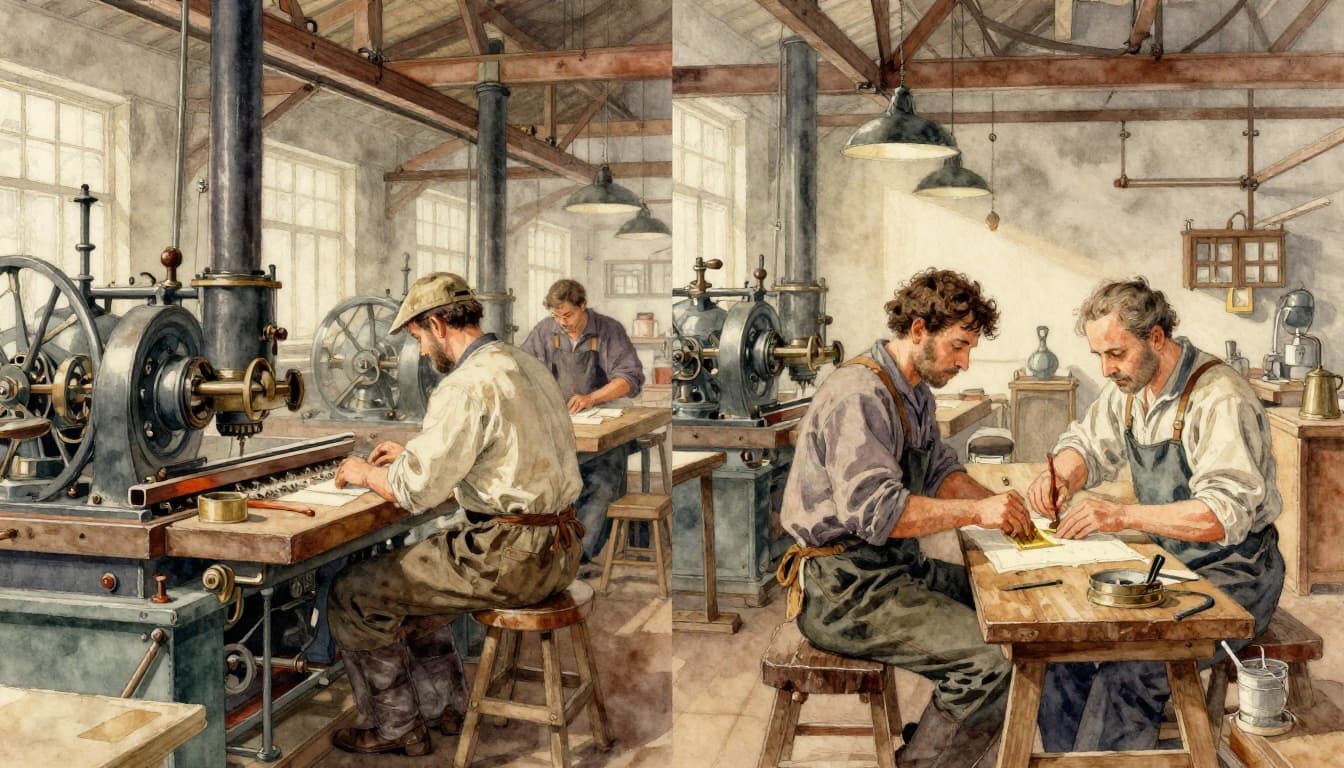
Before factories, many goods came from skilled hands. Cloth, tools, and household items took time. A worker could make a product, then repair it later. Quality depended on craft knowledge.
Factories changed the math. Machines could repeat tasks quickly. That raised output and lowered some prices. It also created a new problem: parts had to match.
So standards shifted toward measurement, sizing, and process control. Instead of “this maker is good,” people moved toward “this batch meets the spec.” Over time, training also adapted, because factories needed repeatable skills.
There’s a human cost here too. Some crafts declined as factories scaled up. Yet new jobs formed in machine operation, maintenance, and shipping.
Autos and Phones: Speeding Up Society and Business
Carriages fit a slower world. Roads were uneven, and travel meant planning days ahead. When cars spread, speed changed daily life. Commuting got easier, trade got faster, and cities reshaped themselves.
That shift forced new standards. Drivers needed rules. Streets needed design changes. Safety checks and vehicle rules became normal because risk increased.
Phones created a second wave of change. Instead of waiting for letters, businesses could coordinate instantly. That improved customer support, sales, and operations across longer distances.
But fast communication also raised new expectations. Privacy, billing practices, and message handling all evolved. Standards shifted because people demanded speed, and the old systems couldn’t keep up.
Digital Era: Computers and Internet Reshape Everything
When computers arrived, organizations stopped relying on one big “team office.” Spreadsheets replaced some manual math. Databases replaced scattered paper files. Then email and online ordering pushed even more work into networks.
That created new standards around data formats, cybersecurity, and online trust. Customers expected things like refunds, reliable delivery, and secure payment. Businesses needed common rules so systems could talk to each other.
Also, automation changed workplace norms. When software handles routine tasks, humans focus on review, exception handling, and strategy. Standards then shift to define what can be automated, and what must stay human.
The big takeaway is this: once tech makes coordination cheap, standards often multiply. They spread through platforms, contracts, and everyday habits.
Fresh Changes Happening Now in 2025 and 2026
In 2025 and 2026, the question is not whether AI will affect rules. It already has. The question is how fast standards tighten, and who gets the burden.
Globally, the pace looks uneven. The EU pushes more detailed requirements. The US often uses state-level rules and sector guidance. Meanwhile, companies face pressure to prove safety, fairness, and oversight before problems explode.
Two themes keep showing up: documentation and human responsibility. Without them, standards struggle to hold.
AI Ethics Getting Stricter for Safety and Fairness
Across 2025 to 2026, one clear trend is phased rollout. In the EU, high-risk AI systems face strict checks like risk testing, human oversight, monitoring, and recordkeeping. General-purpose AI rules started earlier, including transparency steps for model providers.
Real-world standards also target misuse. By late 2026, bans on some risky uses (like social scoring or manipulation) apply under the full high-risk rules. That means companies can’t treat AI as “just software.”
For a legal snapshot of how AI regulation is moving in Europe, review the EU Digital Omnibus on AI proposal mandate. Even if you’re not a lawyer, the structure shows what regulators care about: clarity, documentation, and enforceable controls.
Workplaces Adapting to AI with New Rules
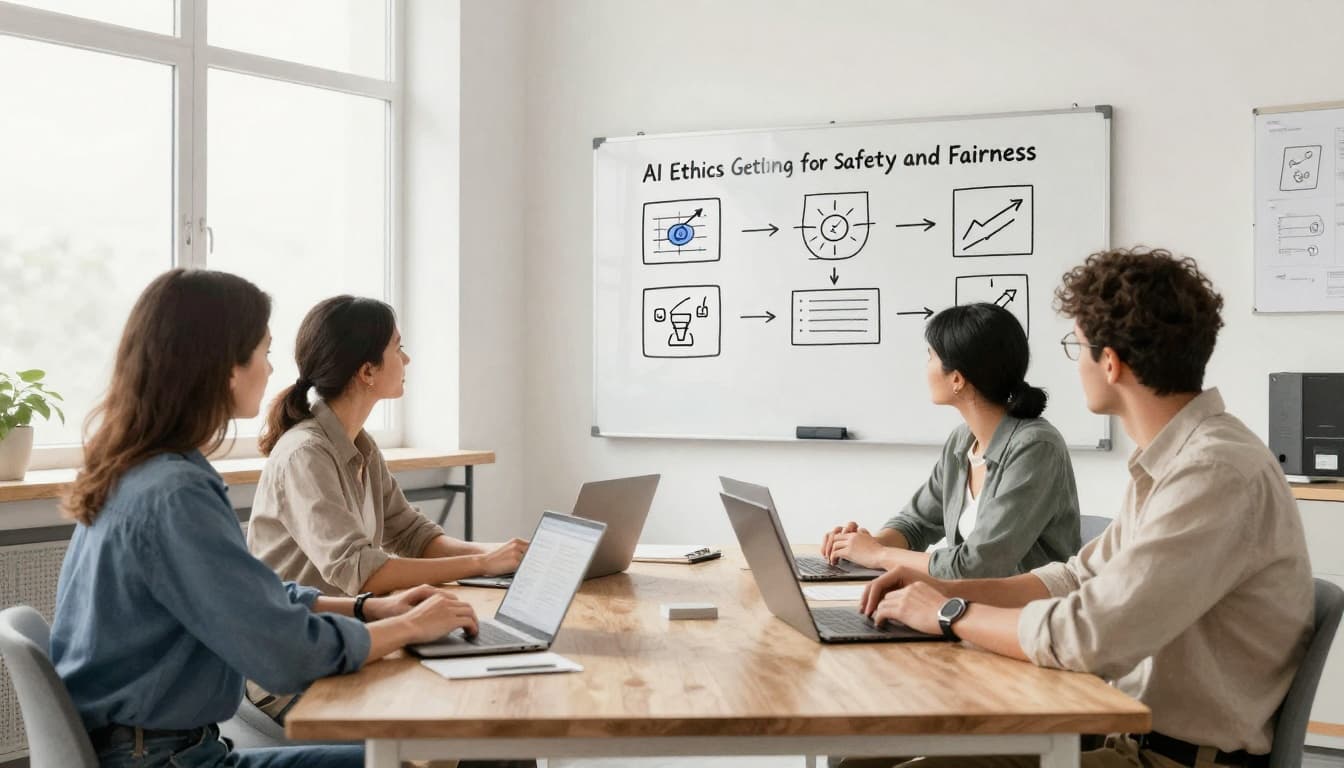
Workplace standards change when tools affect people’s lives. Hiring systems, scoring tools, and monitoring software raise direct fairness and privacy concerns.
In the EU, the logic is consistent: humans must be able to review and override high-risk employment decisions. Companies also need pre-use checks, then ongoing monitoring.
In the US, there’s less one federal rule for everything. Still, states and agencies push practical standards. For example, Texas has moved through new AI requirements for certain harmful uses and disclosure rules around AI in government or health care.
Another recent standard push is AI literacy. The US Department of Labor issued guidance framing AI literacy as a foundation for workers and educators. This matters because “responsible use” depends on people understanding what they’re using. You can see a summary of that shift in the Department of Labor AI literacy framework coverage.
When standards tighten, training becomes part of compliance.
Environment and Social Norms Are Catching Up Too
AI standards are also spreading beyond safety and fairness. Some organizations now check whether AI supports sustainability goals. That can include how models consume data, how they guide energy use, and how they affect carbon reporting.
At the same time, social norms around AI literacy are shifting. People ask basic questions like, “Was this content AI-made?” and “Can I trust it?” Platforms, schools, and employers respond to those expectations.
Still, backlash exists. Some workers and customers resist forced AI use, especially when it replaces human judgment without clear safeguards. As a result, standards often move in waves: a new rule goes out, people test it, then adjust it.
Smart Models That Predict How Standards Evolve
You don’t need a PhD to forecast standards. You just need simple models for change. Think of standards like traffic flow. It shifts when too many cars reach a point, or when roads change.
Here are two models that help explain why standards stabilize, then jump.
Threshold Dynamics: When Group Pressure Tips the Scale
Threshold models say standards change when enough people shift at once. If the change feels too hard, adoption stays low. If it feels manageable, adoption crosses a tipping point.
Low threshold means people adopt quickly after early signals. Medium threshold means it takes steady evidence and peer trust. High threshold means the group needs major proof or strong rules.
In real life, you see it with safety habits. A few people may avoid a risk. But the standard only spreads when many others copy them. That’s why messaging matters. People need a reason and reassurance that the change won’t backfire.
You also get “mutations” in beliefs. Different groups interpret evidence differently. Then the standard becomes a negotiation between views. Over time, the group that offers a workable plan gains influence.
Life Cycles and Negotiations Behind the Scenes
Standards also follow life cycles. First, a need appears (or a technology creates a new risk). Next, people test informal norms. Then formal rules emerge, like policies, contracts, or laws. Finally, the standard declines once tech or values shift again.
Negotiations happen in the background the whole time. Regulators push for safety and fairness. Businesses push for feasibility and cost control. Users push for convenience and clarity.
Education standards show how this works. In many places, schools updated what they taught and how. That often happened after public pressure, new research, and workforce needs changed. Teachers then adapted the standard in practice, not just on paper.
So the best prediction isn’t “standards will always get stricter.” It’s “standards will change to match what people need to coordinate safely.”
Conclusion: Using Standards Change Over Time to Your Advantage
So how standards change over time comes down to pressure from four directions. Tech changes what’s possible. Crises reveal gaps and force speed. Economics and generations shift priorities. Group influence decides what feels normal.
When you resist the shift, the old standard can fade. When you adapt early, you often get better outcomes. You learn faster, and you avoid waiting for a rule to catch up to reality.
Try these next steps. Stay close to tech and policy updates, especially in areas that affect safety and privacy. Watch how peers respond when a new tool appears. Then test small changes in your own process before the standard forces a full switch.
In 2026 and beyond, AI and climate pressures will keep reshaping rules. The real advantage is readiness, not perfect predictions. What standard shift have you already seen happen in your work or community?