An expensive fine can hit fast, even when you think you’re doing “most things right.” In 2025, IBM pegged the average cost of a data breach at $4.88 million. Meanwhile, new rules for AI, privacy, workers, and ESG keep tightening in 2026.
Compliance just means following the laws and rules that govern how you run your business. That includes data privacy, worker pay rules, financial reporting, payment security, hiring fairness, and supply chain conduct. When you miss something, regulators can bring penalties, lawsuits, and costly rework.
So what are the common compliance issues 2026 teams keep tripping over? Here are the big ones, explained in plain language, with practical ways to spot problems before they turn into headlines.
AI Regulations: Spotting Bias and Explainability Traps
AI is starting to look like a new “boss” in many offices. It ranks job applicants, flags fraud, and drafts customer replies. The problem is simple. If the model makes unfair calls, or you cannot explain them, compliance can slip fast.
In the EU, the EU AI Act sets strict expectations for “high-risk” systems, especially in areas like hiring. Penalties can reach up to 7% of global annual revenue for serious violations. If you want a read on enforcement momentum, see EU AI Act enforcement begins and first fines.
In the US, enforcement often focuses on bias, fraud, and consumer protection. Plus, privacy rules still apply when AI uses personal data. If you use AI decision tools, you need audits, documentation, and a clear “why” behind results.
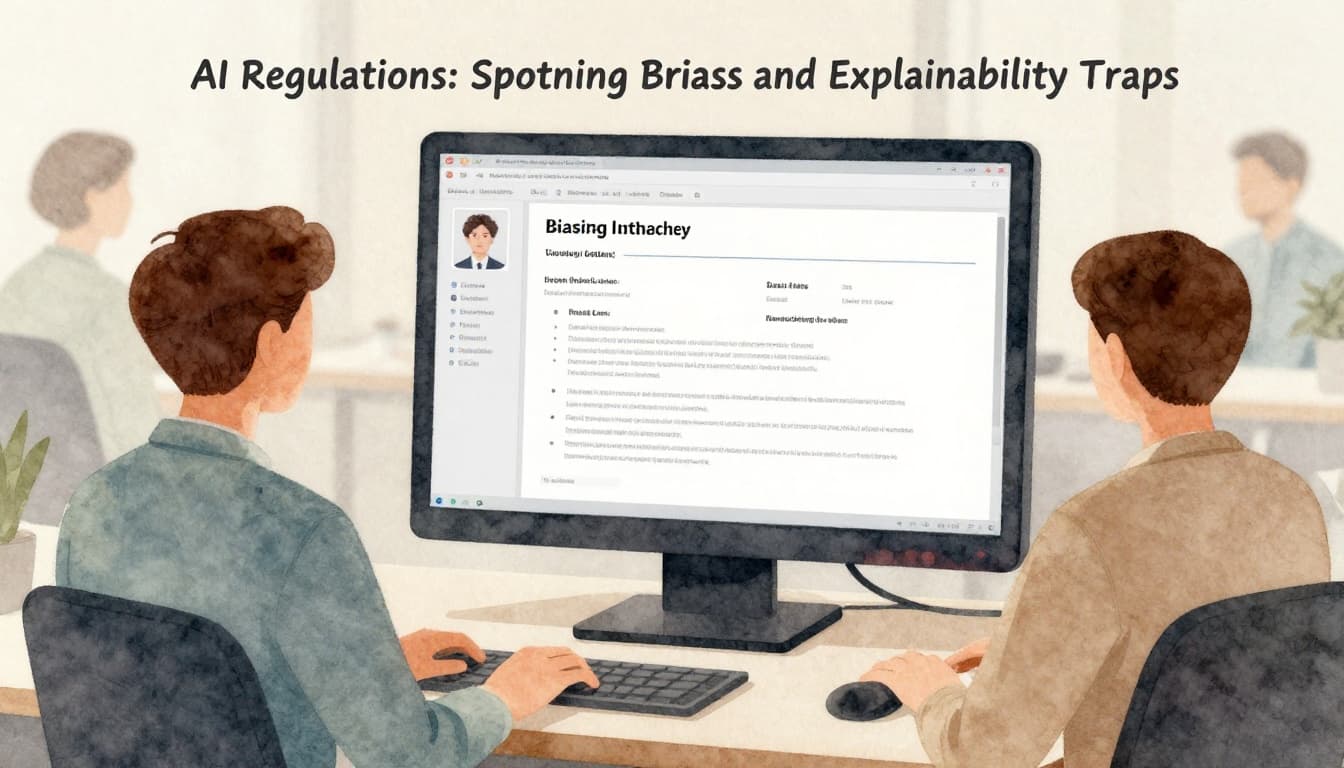
Here’s a quick way to think about it. AI can act like a referee. If the referee never explains calls, or favors one team by accident, you still lose the match. You also risk legal trouble when people claim unfair treatment.
If you need a focused look at audit and enforcement mechanics, this overview of EU AI Act GPAI audits and fines is useful background.
How AI Tools Break Anti-Discrimination Laws
AI hiring tools can violate anti-discrimination rules even when no one “intends” harm. Why? Bias can get baked in through training data, feedback loops, and the way the tool handles proxies.
A common pattern goes like this. Your AI model learns from past hires. If past hiring favored one group, the model repeats the same pattern. Then it filters out “similar” candidates, not because of job fit, but because of hidden correlations.
Also, tests and controls matter. Many teams assume “the model seems accurate” equals “the model is fair.” That’s not enough. You need checks for disparate impact, plus a process for human review and correction.
If you use AI to support decisions about pay, promotion, or hiring, your compliance review should ask hard questions:
- What data feeds the model (and where did it come from)?
- Can you show fairness testing results?
- Who approves final decisions, and how do they override AI output?
This is where AI compliance issues show up in real life. A tool that rejects candidates too often can trigger complaints, investigations, and settlements. Even one bad vendor integration can create risk across your process.
The Push for “Explainable” AI Decisions
If you can’t explain an AI result, compliance gets harder. This is why transparency rules keep growing, especially under the EU AI Act and GDPR expectations for meaningful information.
In plain terms, regulators want more than “trust the system.” They want you to explain:
- Why the system produced a result
- What data it used
- What safeguards you applied
- How you handle errors or challenges
Some models are hard to explain. Black-box systems can feel like guessing. However, “hard to explain” still doesn’t mean “allowed.” You may need documentation, model cards, and clear internal policies.
A practical approach is to build a simple audit pack before you roll AI out:
- A one-page use case summary (what it does, and what it doesn’t do).
- A data map (what personal data goes in).
- A bias and performance test summary.
- A human review workflow.
Without that, you may struggle to respond when regulators ask pointed questions. And if a decision tool impacts employment, you should treat transparency as part of your risk controls.
Cybersecurity Breaches and Data Privacy Fines That Sting
Data privacy issues can start small, then spread across the company. One weak vendor connection, one misconfigured setting, or one missing access review can turn into a breach.
For risk context, breaches can get expensive fast. IBM’s $4.88 million average cost figure is a reminder that cyber risk is not “just IT’s problem.” It becomes legal risk, too. Regulators often tie breaches to poor controls and weak monitoring.
On the EU side, GDPR enforcement can hit hard. Some fines reach €20 million+, or a percentage of annual global turnover. In the US, state laws like CCPA add penalties and class-action exposure. If you need a primer on enforcement trends and fines, read GDPR fines and data privacy enforcement trends.
Then there’s the “notice” problem. Many organizations only think about breach rules after an incident happens. However, the real work starts before the breach:
- Know which data you store.
- Know where it flows.
- Know who can access it.
Navigating GDPR and CCPA Penalty Pitfalls
GDPR and CCPA both care about consent, user rights, and breach handling. Yet they differ in how those obligations show up.
Under GDPR, consent must be valid, data access needs controls, and breach notification timelines can be strict. Under CCPA and similar state laws, you also face rules around consumer rights, “do not sell or share” links, and specific breach and notice duties.
Common compliance failures include:
- Collecting more data than you need
- Using weak consent methods
- Overlooking third-party sharing
- Missing opt-out handling
- Not running tabletop incident drills
Also, you should assume enforcement keeps expanding at the state level. For a current view of US state privacy law changes and enforcement, use US state privacy law tracker for 2026.
A good mental model is this: GDPR and CCPA are like two different locks. If you try the same key for both, it won’t turn. Instead, map your obligations by region and build controls that match the rules.
HIPAA and PCI DSS: Health and Payment Data Nightmares
HIPAA and PCI DSS target different industries, but both demand strong protection. With health data, HIPAA focuses on safeguards and breach rules. With payment data, PCI DSS focuses on protecting card information.
In practice, teams often stumble on the same basics:
- Encryption gaps (especially during transfer)
- Too many users with access to sensitive data
- Vendor systems that are not covered by your security standards
- Weak incident response plans
HIPAA failures can bring investigation and settlements. PCI DSS gaps can lead to fines, contract termination risk, and major payment disruption.
A simple way to spot weakness is to ask, “If someone stole one file today, what would we do in 24 hours?” Then check whether your controls, logging, and response plan match that reality.
Worker Classification Mix-Ups Leading to Huge Fines
Worker classification looks like HR paperwork. It isn’t. It’s also wage-and-hour risk, benefits risk, tax risk, and litigation risk.
The US Department of Labor uses the Fair Labor Standards Act (FLSA) framework to judge employee versus independent contractor status. Enforcement has shifted over time, and recent policy moves created extra uncertainty. For example, the DOL paused parts of the 2024 rule in 2025, while litigation and updated proposals continued.
If you want a legal-style overview of worker classification changes, see DOL proposed worker classification rule implications.
Even when you “call someone a contractor,” the test is still about how the work really happens. Regulators focus on control, permanence, and work relationship.
Also, misclassification can trigger back pay and overtime liabilities. Some penalties can reach $2,000 per worker per violation in certain cases, plus legal costs. In other words, one wrong label can cost much more than payroll savings.
Employee or Contractor: Getting It Wrong Hurts
Here are the classic contractor mistakes:
- You control schedules like an employee.
- You dictate methods, tools, or day-to-day tasks.
- You expect exclusivity.
- You treat the person like part of the team long-term.
The “gig” model makes it easy to blur lines. Meanwhile, fast hiring can lead to rushed paperwork. If you onboard quickly, classification reviews often get skipped.
A helpful analogy is credit card billing. If you buy groceries but code it as office supplies, it still gets audited. Likewise, mislabeling a worker doesn’t make risk disappear.
For a safer approach, review classification at three points:
- At hiring (before contracts start).
- When job duties change.
- During renewals.
Then document how you reached the decision. If you ever face a claim, your notes matter.
State-by-State Paid Leave Headaches
Next comes paid leave rules. In the US, they vary by state, and rules can change each year. If you operate in multiple locations, you might have different posting rules, benefit handling, and eligibility tests.
Teams often mess up when they use one “national” policy and assume it fits everywhere. It doesn’t.
So set up a process that links payroll data to the worker’s work location, not only their employer address. That keeps your paid leave obligations aligned with the laws that actually apply.
Supply Chain Ethics and ESG Reporting Overwhelm
Supply chain compliance now connects to brand reputation and stock market risk. In the EU, CSRD expands ESG reporting, and it pushes more detail on environment and social impacts starting in 2026. In the US, climate-related disclosures also tie into financial reporting expectations.
Meanwhile, supply chains face ethics pressure too. Forced labor rules and human rights due diligence are a real focus. If a supplier violates standards, your company can get pulled in.
The hardest part is visibility. Many businesses don’t know what happens deep in tier-two and tier-three suppliers. Then, when a scandal breaks, the company scrambles for proof it tried.
This is where ESG compliance challenges show up as “data problems.” You need records, audits, and supplier reporting that you can defend.
Vetting Suppliers for Human Rights Abuses
Supplier checks can’t stop at a vendor brochure. You need evidence. That might include audits, certifications, worker interview results, and remediation tracking.
Fast fashion scandals and other industries’ forced labor concerns show the same pattern. When procurement skips due diligence, problems can sit for years.
At minimum, build a supplier due diligence cadence:
- Risk rank suppliers by product type and geography.
- Require written standards and reporting.
- Run audits when risk increases.
- Track corrective actions to completion.
If you treat supplier ethics like a one-time onboarding step, you’ll miss new risks.
Mandatory ESG Disclosures Coming Fast
ESG reporting also creates pressure for accuracy. Even if you want to “say less,” disclosures still need backing data.
Under CSRD-style expectations, the report must connect to controls and internal documentation, not only marketing claims. And because ESG data can affect how investors view performance, it can tie back to financial reporting processes.
So align ESG reporting with your existing governance. If your financial team trusts only certain data sources, ESG should follow similar standards.
Tax Changes, Pay Transparency, and SOX Reporting Snafus
Taxes keep changing, and workplace payment rules can shift too. Even when changes sound small, they create paperwork and training needs.
One example is how wage-related rules can shift around overtime and tips, plus new reporting requirements. Another example is IRS guidance and waiver rules when employers need relief in specific cases. State rules can also require salary range postings for many job openings.
Then there’s SOX. Sarbanes-Oxley focuses on accurate financial reporting and controls. If payroll reporting, expense systems, or vendor payments connect to financial statements, weak controls can become a SOX issue.
Put simply, tax and pay rule changes increase the chance of mistakes. And mistakes increase the chance of audits.
Workplace Speech and Culture Compliance Clashes
Workplace rules now cover more than harassment and discrimination. Many organizations also face pressure around DEI practices, fairness, and respectful conduct policies. Plus, employee data and communications can fall under privacy rules depending on what systems you monitor.
Culture issues can turn into legal risk when managers do not handle complaints well. A casual joke in chat can become evidence later. A vague policy can also create problems, because staff don’t know what “allowed” means.
In 2026, you should treat policies like living tools. Train managers on what to document. Clarify how complaints are reviewed. Update rules as laws change.
That effort often feels tedious. Still, it’s cheaper than defending a lawsuit.
Conclusion: Fix the Patterns Before the Penalties
The hook from the start still matters: average breach costs are high, and AI rules now have teeth. Most common compliance issues in 2026 come from the same patterns, weak controls, unclear documentation, and “we’ll handle it later” decision-making.
If you want the fastest improvement, focus on three areas: regular audits, clear training for AI and privacy, and stronger supplier and worker classification checks. Keep policies current, then build repeatable workflows so teams don’t rely on memory.
Ready to spot your biggest weak spots before a regulator does? Share one compliance issue your team struggled with in the comments, and subscribe for more practical updates in 2026.