AI rules and carbon rules are hitting the same wall right now: everyone wants safety and trust, but not everyone wants the same rules.
At Davos in early 2026, leaders talked a lot about trusted AI and “sovereign AI,” meaning each country keeps control of data and models. Meanwhile, climate experts pushed for more consistent emissions accounting, because messy reporting makes it harder to compare results.
So here’s the big question: will global standards become more unified, or will we keep getting a patchwork of rules?
Global standards are the shared technical and policy rules that help products, services, and firms work across borders. You see them in tech (like AI safety and telecom), the environment (like emissions tracking), trade (like customs and digital taxes), and regulations (like privacy and supply chain duties).
The thesis is simple: climate emissions show the strongest path toward unity, but overall momentum points to more fragmentation. Geopolitics and national interest keep pulling rules apart, even when businesses want one common way to comply.
In the sections ahead, you’ll see what drives the split in AI, trade, and privacy. Then you’ll look at the rare wins in emissions reporting, what experts expect next, and where you might still spot a real chance for unification.
Forces Driving Standards Further Apart Today
Global standards used to feel like a “common language” that let countries and companies move together. Today, trust breaks faster. As a result, standards and enforcement rules diverge more often.
Several forces are pushing in the same direction. Tech competition changes fast, trade rules face political pressure, and regulation follows local values. Even when people agree on the goal, they disagree on who controls the tools and how risk gets handled.
Tech battles in AI and beyond
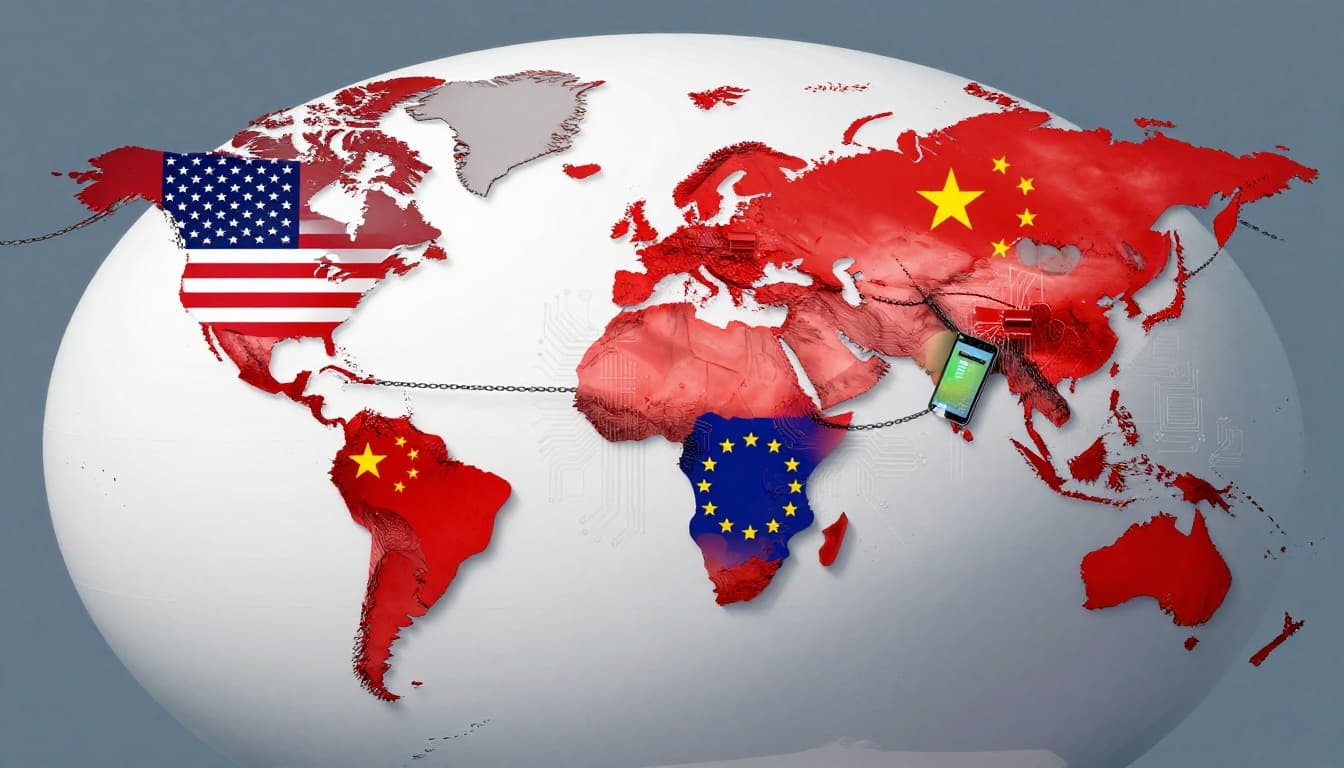
At Davos 2026, AI discussions leaned toward safety, accountability, and security. Leaders focused on how to govern AI agents, including the risk of “shadow AI,” where hidden systems are used without clear oversight.
Yet the talks did not produce one set of global rules. Instead, they leaned into sovereign AI. Countries want interoperability, but they also want control over data and model use.
This tension shows up in real constraints, not just opinions. For example, leaders stress that “one policy fits all” does not work because risk differs by sector (health, finance, transport). That makes unity harder, because each region builds around its own risk picture and market goals.
If you want context on why “control” is now part of standards, see digital sovereignty after Davos 2026.
Also, next-gen telecom shows similar gaps. By March 2026, there are no major 6G standards outcomes at the global level. The work remains in study phases, with many timelines pushing out to at least 2029. Countries still race, because waiting too long hurts national competitiveness.
Trade walls rising at the WTO
Trade standards take longer to change, but geopolitics can still reshape them quickly. One clear example is digital trade.
The WTO’s e-commerce moratorium, which blocks countries from adding tariffs to digital goods sent online, is set to expire March 31, 2026 unless countries agree to extend it. The U.S. wants permanence, mainly to protect stability for digital businesses.
However, some countries resist. The result is more uncertainty for global firms. If the moratorium ends, nations could add tariffs again. That would raise costs and encourage separate regional “digital lanes.”
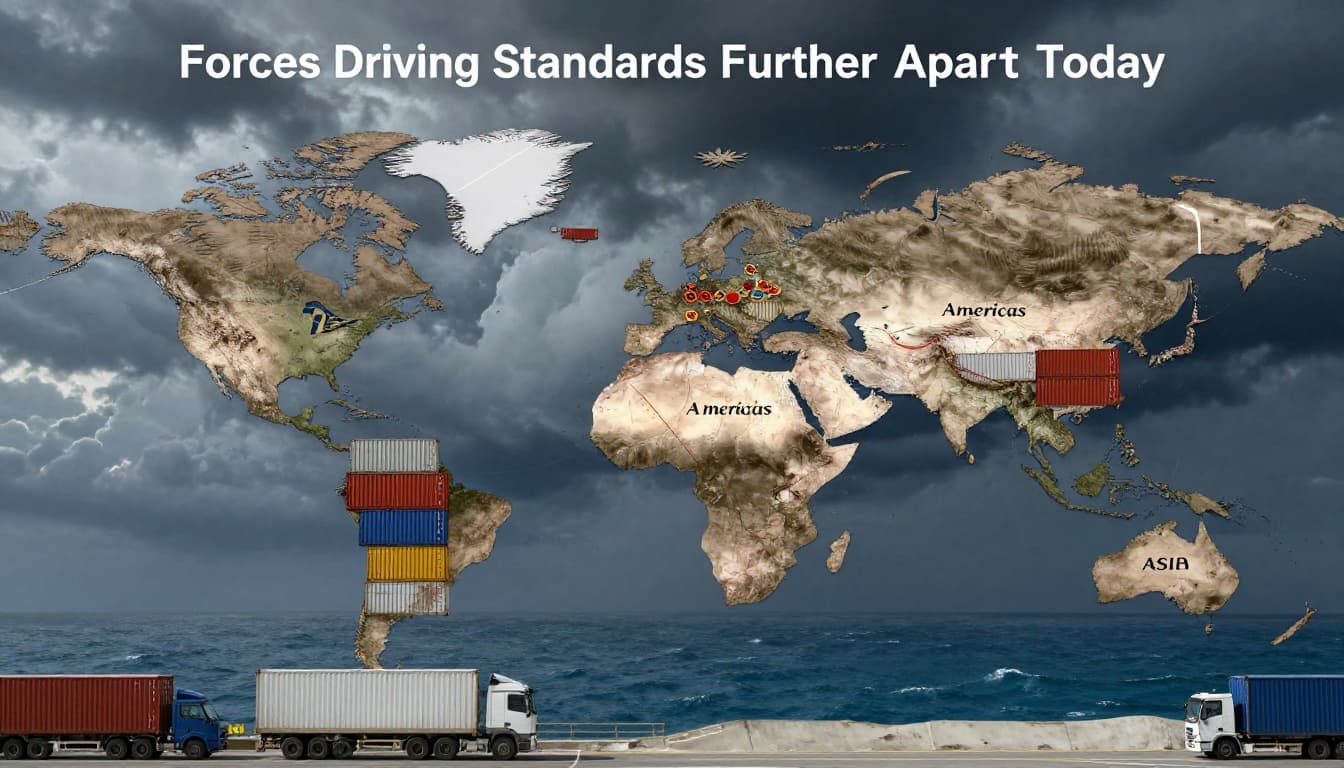
When trade gets fragmented, standards follow. Companies adapt to each market. They build compliance workflows that match local tariff rules, data rules, and reporting steps. Over time, that makes “one standard” less attractive for policymakers.
For ongoing WTO reform and the politics around digital tariffs, see digital tariff deal deadlock.
Meanwhile, broader tariff trends still matter. Even when countries talk about reform, many keep using trade tools that raise friction. That keeps pressure on global unification, because businesses can’t plan around a stable baseline.
Regulatory splits in privacy and rules
Privacy and supply chain duties are a second major source of fragmentation.
In the EU, the Corporate Sustainability Due Diligence Directive (CSDDD) pushes large companies to check their supply chains for human rights and environmental harm. The rules phase in starting in 2027 for the largest firms, then expand later. Penalties can be heavy, including fines tied to global sales.
The U.S., by comparison, has moved in the opposite direction in 2026. The country has rolled back parts of ESG reporting pressure. That doesn’t create a direct “one-to-one” mismatch with the EU on privacy, but it does change incentives. If one region requires stronger audits and reporting, companies face different compliance needs.
Privacy also gets tangled with supply chain rules. EU approaches can require more supplier data sharing for due diligence. That can raise concerns about data minimization and who gets access to sensitive information.
At the same time, enforcement differs. One country might actively investigate and penalize, while another relies more on voluntary programs. That uneven enforcement makes it harder for businesses to build one global system.
Even accounting shows the politics. Measurement rules can shift based on what regulators prioritize. One region rewards certain disclosures. Another focuses on different risk areas. So even “the same metric” can end up meaning different things.
Rare Wins for Unity in Climate and Emissions
While many policy areas fracture, climate and emissions rules keep finding ways to align. That doesn’t mean unity is easy. It means the incentive is strong.
If you want to compare progress across countries, emissions accounting has to mean the same thing. Otherwise, companies and governments argue about numbers instead of cutting pollution.
This is where you see targeted unification work best: not because everyone loves the same approach, but because emissions tracking supports trade, investment, and public trust.
The big 2025 emissions breakthrough
A key step came through the ISO and GHG Protocol partnership announced in 2025. The core idea is to harmonize existing standards and work toward unified rules for measuring and reporting greenhouse gas (GHG) emissions.
This matters because emissions accounting used to feel like separate “languages.” One standard might guide corporate reporting. Another might target product or project measurement. Different scopes could also make comparisons inconsistent.
The ISO and GHG Protocol partnership aims to reduce that confusion. In practice, that means more consistent guidance on what gets measured, how boundaries get set, and how reporting works across levels.
For the official details, see ISO and GHG Protocol partnership announcement.
There’s still work ahead. Standards take time to adopt, and companies need training. Even so, this partnership gives the market a reason to expect alignment instead of endless rewrites.
Utilities leading the way to common ground
Another sign of unity is how power and utilities push toward shared platforms.
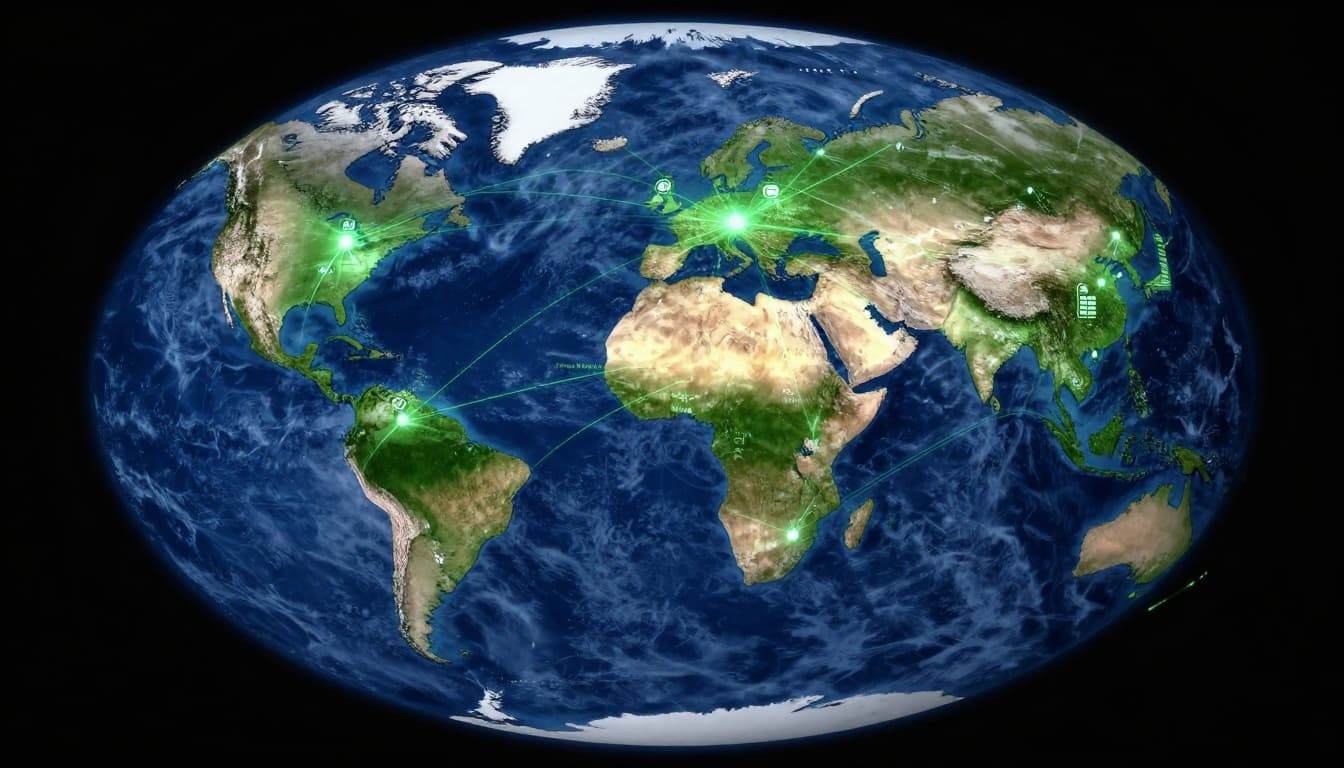
As grids modernize, smart metering and grid reporting create a demand for compatible measurement rules. North America, parts of Europe, and Latin America all face similar issues: how to track energy use, reduce losses, and report results.
When utilities share approaches, other sectors copy them. Businesses then build internal reporting systems that can work across regions. That reduces friction for audits and supplier reporting.
Climate unity also has a practical edge: emissions data can plug into finance. If investors understand the numbers, capital moves faster. That’s a strong reason for businesses to accept one reporting baseline.
Still, this unity is “best effort,” not full lockstep. It covers measurement logic more than politics. If a region changes enforcement or reporting timelines, companies still feel the gap.
But compared to AI rules and trade tariffs, emissions accounting has more traction toward shared meaning.
What Experts See Coming Next for Global Standards
If the last year felt messy, the next few years could feel even more so.
Most experts see a world where standards split by sector and by region. In other words, you get “unity in patches,” not a single unified system. However, that doesn’t mean standards unification is dead.
It means unification will likely happen where it’s easiest and most profitable, like emissions accounting and core measurements.

ISO’s hope for standards as bridges
At Davos 2026, ISO leadership stressed that shared standards can help solve problems made by rapid tech change and geopolitical division.
That message fits a bigger pattern. Standards often act like “trust infrastructure.” Even when governments disagree, businesses need a way to test products, report results, and verify claims.
However, standards alone can’t force political alignment. They can only reduce technical barriers. If one region refuses to adopt a standard, firms must still follow local rules.
So the likely path is partial alignment. Standards bodies can unify the definitions. Governments can still diverge on enforcement and liability.
The geopolitical lock on splits
Geopolitics keeps pushing toward fragmentation in tech, finance, and supply chains.
AI is a good example. Countries want trusted AI, but each side also wants control. That’s why “sovereign AI” keeps showing up, even when people agree on safety goals.
In trade, the WTO struggle shows the limits of multilateral rules when major players disagree. Digital tariffs may be a case study. If countries won’t extend the moratorium, standards and market access get more region-specific.
Money systems add fuel too. Plans tied to reducing U.S. dollar reliance keep expanding. Stablecoins, new settlement approaches, and partner alliances can all shape how trade infrastructure gets built. Once companies design around separate systems, standards drift further.
Meanwhile, debt and industrial policy make “local first” more attractive. If a government sees domestic growth as the top goal, global unification feels less urgent.
That’s why many market watchers predict more local rules for the next cycle, especially in tech and compliance reporting.
Still, emissions unity shows that shared crises can pull standards together. Climate pressure hits everyone, even if policies differ. And investors still want comparable data.
So, can tech and climate lead change? Possibly, but not in the same way. In tech, unification depends on governance and security. In climate, it depends on measurement credibility. Different problems, different timelines.
Why Unity Might Still Have a Shot Despite the Odds
Even with fragmentation now leading, unity can still grow. The reason is simple: businesses need predictability.
If you sell across borders, you hate rebuilding compliance systems every year. You also want fewer conflicts between regulators. Therefore, even when policymakers disagree, companies often push back by asking for shared baselines.
Shared needs show up in a few places:
- Trade depends on compatible rules. If standards make shipments, testing, and labeling easier, firms keep asking for them.
- Interdependence in tech keeps growing. AI models and telecom systems rely on networks. That creates pressure for interoperability.
- Climate reporting is hard to fake. Emissions data can be audited, and investors notice credibility.
- Public trust is becoming a cost factor. When firms can’t prove claims, they face higher scrutiny.
However, it’s unlikely that “global standards unification” will arrive as one global package. More likely, you’ll see two-track progress: continued regional divergence in governance, plus shared standards for definitions and measurement where verification works.
In the near term, expect splits to continue, especially in AI governance and trade policy. Yet targeted unity can still expand in emissions and related reporting.
So watch these areas closely over the next few rounds of policymaking: emissions accounting partnerships, adoption timelines for reporting rules, and whether AI safety guidance starts to converge around measurable outcomes.
If those signals improve, unity can spread where it already has proof.
Conclusion
Global standards are not turning into one unified system right away. Fragmentation still wins in AI governance, privacy duties, and trade rules, because geopolitics rewards local control.
Still, climate emissions show a brighter path. Partnerships like the ISO and GHG Protocol work aim to make emissions accounting more consistent, so the same number means the same thing across borders.
The answer to “will global standards become more unified?” is therefore nuanced: not fully soon, but targeted wins are real.
What should you watch next as these rules evolve? Share your view in the comments, especially which area you think could unify first, AI safety, digital trade, or emissions reporting.